Table of Contents
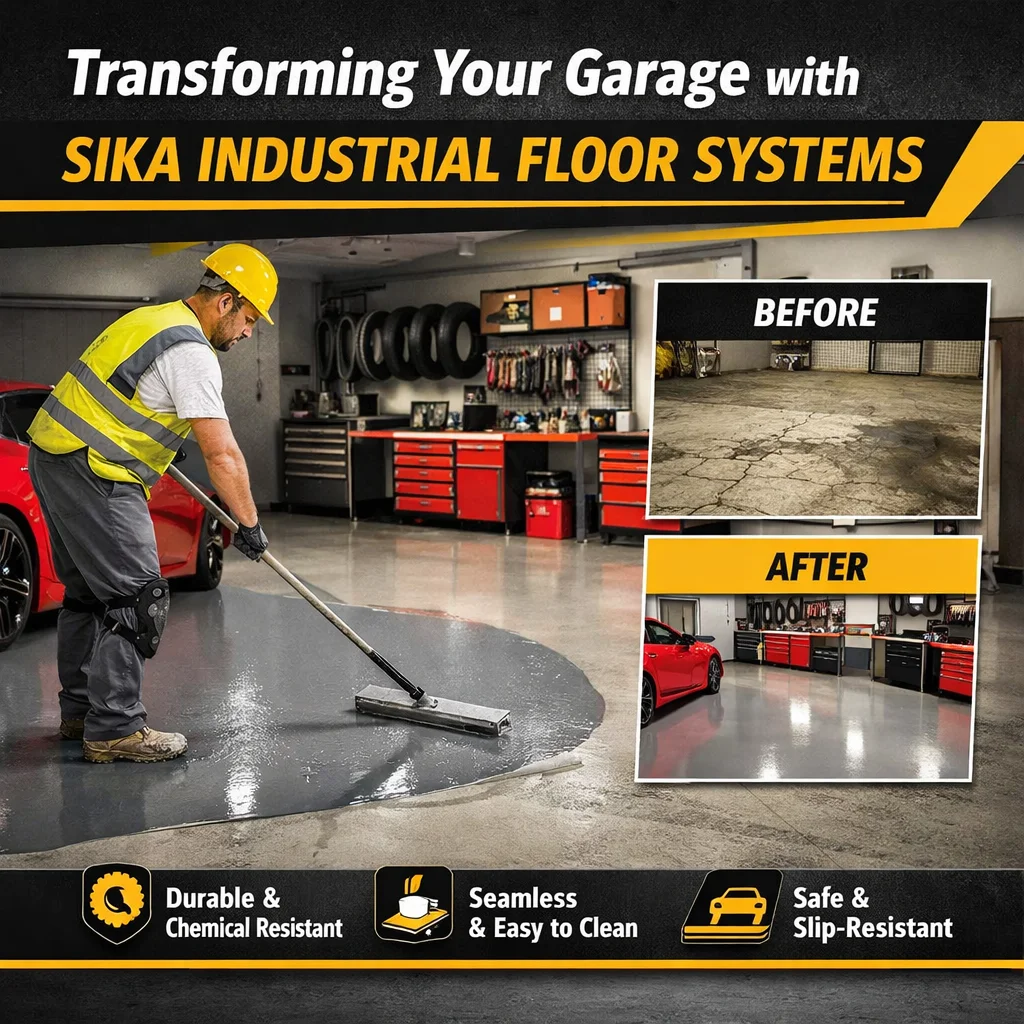
Transforming Your Garage with Sika Industrial Floor Systems
There is a moment of quiet pride when you step back and look at your garage—not as a dumping ground for old boxes and gardening tools, but as a legitimate extension of your home. For years, my garage was the neglected stepchild of the house. The concrete was dusty, stained with mysterious oil patches from the previous owner, and every time I swept it, a cloud of grey powder would settle back onto my car within hours. I told myself this was just “how garages are.”
Then, I parked my car in a friend’s newly renovated space. The floor was sleek, seamless, and actually clean. It reflected light from the windows, making the entire space feel less like a cave and more like a showroom. That was the moment I realized that the floor is the foundation of the entire room’s potential. If you are reading this, you are likely standing in your own dusty space, envisioning the same transformation. The good news? Transforming your garage with Sika Industrial Floor Systems isn’t just a fantasy reserved for luxury homes; it is a practical, achievable project that adds real value to your property and sanity to your life.
The Hidden World Beneath Your Feet
Before we talk about the glossy “after” photos, we need to talk about what you are standing on. Concrete is porous. To the naked eye, it looks solid, but under a microscope, it resembles a rocky coastline full of caves and crevices .
Every time you drive a hot car in from a Pakistani summer, or drag a jack across the floor, you are stressing that surface. Water penetrates, freeze-thaw cycles (in colder northern areas) cause cracking, and chemicals eat away at the surface bond. This is why a bare concrete floor will always eventually dust, stain, and deteriorate. It is not a matter of if, but when.
Transforming your garage with Sika Industrial Floor Systems starts with respecting the science of the substrate. Sika, a global leader in construction chemicals, doesn’t just paint the surface; they engineer a solution that bonds with the concrete at a molecular level, creating a surface that is greater than the sum of its parts .
Why “Industrial” Matters in a Residential Space
You might think “Industrial Flooring” sounds like something for a factory floor or a loading bay. You would be right—and that is precisely why you want it in your home. Industrial floors are designed to withstand constant traffic, heavy impact, and corrosive liquids .
When you choose a residential-grade paint from a hardware store, you are buying a cosmetic film. When you commit to transforming your garage with Sika Industrial Floor Systems, you are installing a heavy-duty armor system. Sika offers solutions that range from sleek, high-gloss epoxy finishes for the showroom look, to slip-resistant textures that reduce injury risk on wet surfaces .
| Feature | Standard Hardware Store Paint | Sika Industrial Floor System |
|---|---|---|
| Bonding | Surface level | Penetrates and bonds chemically |
| Resistance | Scuffs and light dirt | Chemicals, abrasion, hot tire pickup |
| Lifespan | 1-3 years before peeling | 10+ years with proper maintenance |
| Finish | Thin, plastic-like | Thick, seamless, professional |
The Reality Check: Surface Preparation
Let me share a hard-earned lesson. The first time I attempted a coating project, I was impatient. I swept the floor, parked the car outside, and started painting. It looked fantastic for exactly three weeks. Then, the concrete started to “bleed” moisture, lifting the coating in ugly blisters.
The single most critical step in transforming your garage with Sika Industrial Floor Systems is preparation. You cannot skip this. Sika systems require a sound, clean, and profile
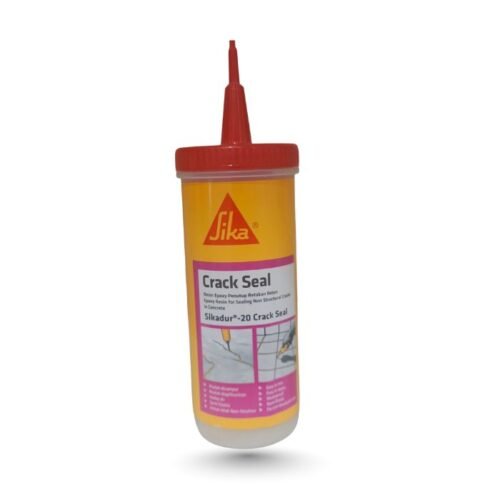
This usually involves grinding the concrete to open its pores, or diamond grinding to remove old residues and impurities . It is dusty work, but it is the difference between a coating that adheres for decades and one that peels up with the first hot tire. If your concrete has deep cracks or spalling (where the surface has flaked away), you need to address that first.
Forum users and professionals alike recommend using repair mortars for this step. For instance, products like SikaTop 122 Plus have been discussed in enthusiast communities for repairing low spots and damage before applying the final epoxy coat . One user noted that while Sika makes professional-grade products, ensuring compatibility between your repair mortar and your final coating is essential—something Sika’s system approach handles seamlessly .
Choosing Your Armor: Epoxy vs. Cementitious Coatings
When browsing the Sika Chemicals website, you will notice a variety of products. For the garage, you generally have two paths for transforming your garage with Sika Industrial Floor Systems:
1. The Epoxy Path (The Showroom Finish)
This is what most people picture when they think of a dream garage. Epoxy systems, like the Sikafloor® MultiDur EB-14 series, provide a high-build, glossy finish that is liquid-proof and easy to clean . They are resistant to chemicals and mechanical wear, making them perfect for garages where you might be working on cars or spilling solvents.
- Best for: Aesthetics, high gloss, stain resistance.
- Application: Usually involves a primer, a basecoat broadcast with quartz sand for texture, and a topcoat .
2. The Cementitious Path (The Heavy-Duty Protector)
If your garage is less of a showpiece and more of a active workshop, or if it is exposed to moisture from the outside, a cementitious coating like those in the PCI Zemtec Outdoor range might be your hero . These are mineral-based coatings that create a highly durable, breathable layer. They are resistant to weathering, de-icing salts, and permanent wetness .
- Best for: Durability, outdoor exposure, wet areas.
- Application: Applied as a slurry coat that cures into a hard, dense layer.
A Personal Walkthrough: The Transformation Process
If I were to do my garage over again, knowing what I know now, here is how I would approach transforming your garage with Sika Industrial Floor Systems:
- The Purge and Clean: Empty the space completely. You cannot work around a car or shelves.
- The Repair: Assess the concrete. Are there low spots where water pools? Use a repair mortar to level them .
- The Grind: Rent a concrete grinder. This opens the pores and ensures the primer can bite into the concrete .
- The Prime: Apply a primer. This is the glue. For epoxy systems, a product like Sikafloor-151 ensures the topcoat adheres perfectly .
- The Coat: Mix the epoxy or cementitious coating thoroughly (a slow mix to avoid bubbles!) and apply evenly with a roller or spreader .
- The Finish: For epoxy, you might broadcast quartz sand for slip resistance or add color chips for visual effect. For cementitious floors, you might apply an impregnation sealer for protection .
- The Wait: This is the hardest part. You must let it cure. While you might be able to walk on it in 24 hours, full chemical resistance and strength can take up to 7 days .
The Long-Term Payoff
Once the curing is done, the transformation is complete. You now have a surface that is:
- Dust-Free: No more concrete dust coating your tools.
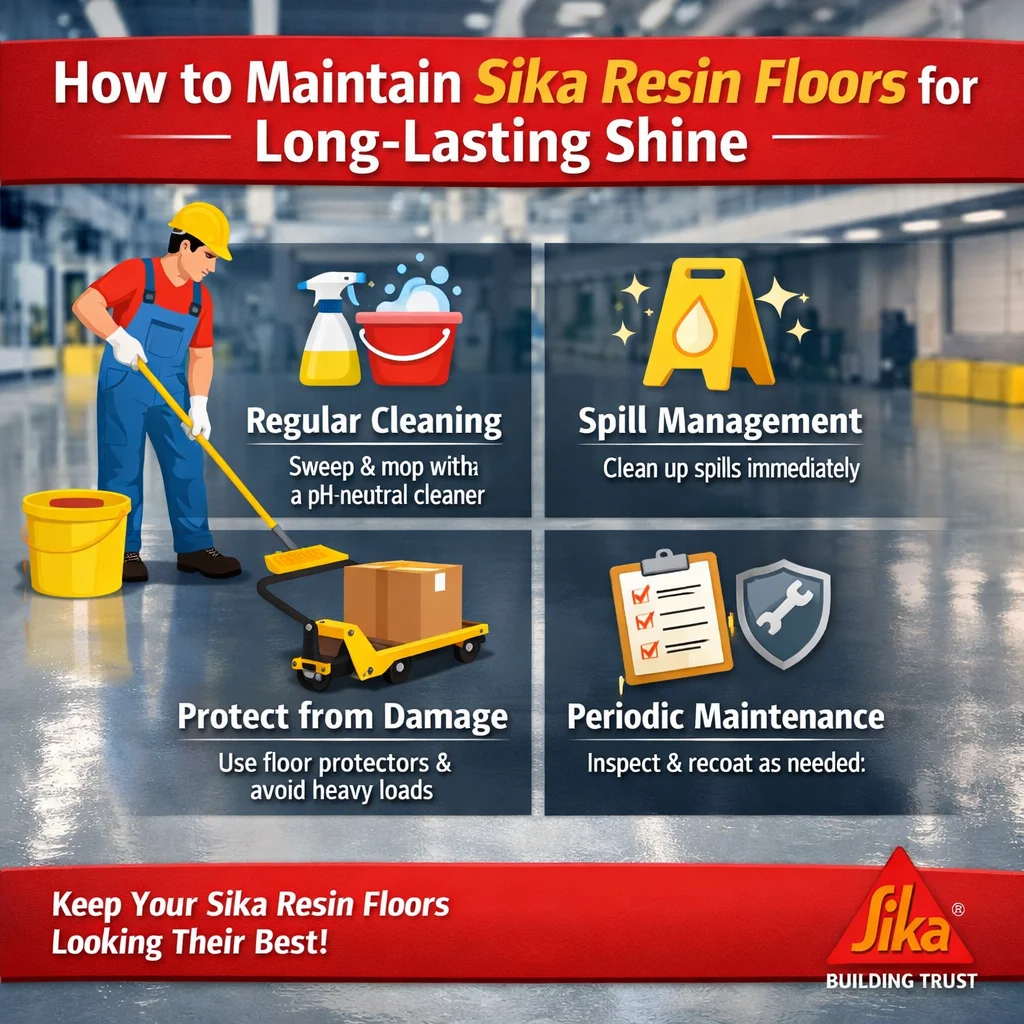
- Easy to Clean: A quick sweep and a mop, and it looks like new.
- Brighter: Light colors reflect light, making the space safer and more inviting.
- Valuable: A coated garage floor is a massive selling point for any home.
Transforming your garage with Sika Industrial Floor Systems is more than a home improvement project; it is an investment in your daily life. It is the satisfaction of walking into a clean, organized, and professional-grade space every single day.
Ready to Start Your Own Transformation?
Whether you are looking for the high-gloss elegance of Sikafloor epoxy or the rugged durability of PCI cementitious coatings, we have the certified products and the expertise to guide you.
Don’t let another season ruin your concrete.
Browse our full range of Sika Industrial Floor Systems online, or contact our support center at 03329015232 to speak with a product specialist today.