Table of Contents
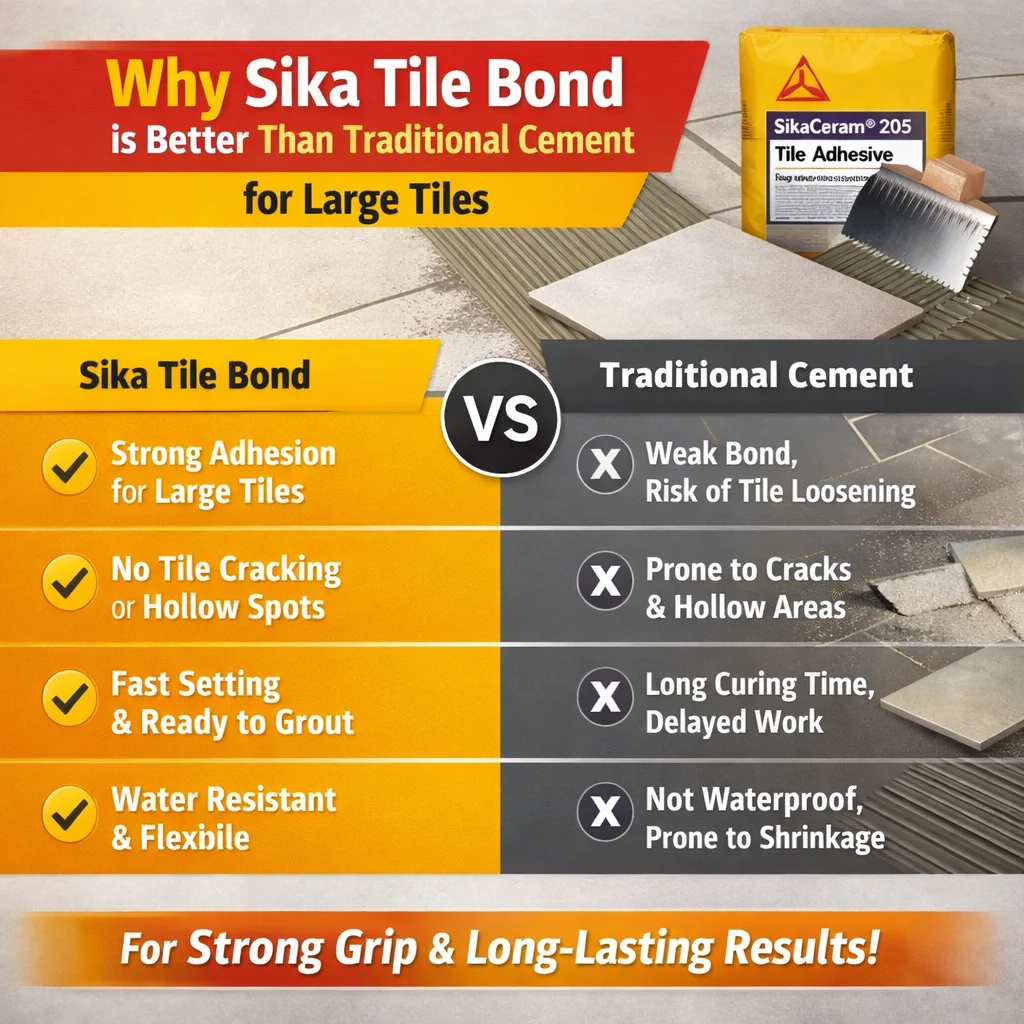
Why Sika Tile Bond is Better than Traditional Cement for Large Tiles
The Day My Bathroom Floor Nearly Became a Demolition Project
I still remember watching my uncle wrestle with massive 24×24 inch porcelain tiles during his dream home renovation. He mixed sand and cement just like his father taught him, applied it with confidence, and stepped back to admire his work. Three days later, we heard the sound no homeowner ever wants to hear—the hollow crrack of tiles separating from the floor. Three tiles had loosened. The rest sounded hollow when tapped. That 50kg cement bag turned into a 500 rupee lesson: traditional methods fail spectacularly with large format tiles.
If you’re planning to install those beautiful large tiles you’ve been eyeing, here’s the truth nobody tells you—Sika Tile Bond is better than traditional cement for the job, and the science behind it will save you from my uncle’s expensive mistake.
The Weight Problem Nobody Talks About
Let’s do some quick math. A standard 2×2 foot porcelain tile weighs approximately 7-8 kg. When you multiply that by 30 tiles for an average bathroom, you’re looking at nearly 250 kg of ceramic hanging on your walls or pressing down on your floors .
Traditional cement-sand mortar works like this: you mix, apply, and pray that gravity doesn’t win. The bond forms through mechanical adhesion—essentially, the cement paste seeps into the porous back of the tile and hardens. It worked fine for decades because our grandparents used small 6-inch tiles. But large tiles change everything.
Here’s why Sika tile bond is better than traditional cement for these heavyweight applications:
Cement mortar achieves bond strength of approximately 0.5 N/mm² under ideal conditions . Sika tile adhesives deliver 1.0 N/mm² or more—literally double the holding power . That extra strength means your tiles stay put even when family members jump out of the shower or kids run across the floor.
The Polymer Difference: What Makes Sika Special
I asked a site supervisor once why his Sika-bonded tiles never failed. He smiled and said, “Yeh cement nahi hai, yeh glue hai jo cement jaisa lagta hai.” He wasn’t wrong.
Traditional cement is like using plain daal without tadka—it works, but it’s missing something crucial. Sika tile adhesives contain polymer modifiers that transform ordinary cement into something extraordinary . These polymers create:
- Flexibility without fragility – Large tiles expand and contract with temperature changes. Cement cracks under this stress. Polymer-modified adhesives flex slightly, absorbing movement without failing .
- Chemical bonding – While cement grabs onto tile surfaces mechanically, polymers actually bond chemically with both the tile and substrate .
- Water resistance – Standard cement absorbs moisture, which is why bathroom tiles eventually loosen. Polymer-modified adhesives resist water penetration, making them ideal for wet areas .
The “No-Slip” Factor That Saves Sanity
Remember trying to tile a wall with cement mortar? The tiles would slide down slowly, like they were trying to escape. You’d spend hours with plastic wedges and spacers, constantly adjusting.
SikaCeram products feature something magical called “no vertical slip” . Once you position a tile, it stays put. No wedges. No constant readjusting. No discovering at the end of the day that your perfectly spaced tiles have migrated south overnight.
For large tiles on walls, this isn’t just convenient—it’s essential. A 60×60 cm tile weighs too much to fight gravity while the mortar slowly cures. Traditional cement can’t hold it. Sika tile bond can .
The Pre-Soaking Nightmare
Ask any old-school mason about tiling, and they’ll insist on soaking tiles in water overnight before installation. Why? Because traditional cement draws moisture from the mortar too quickly, weakening the bond. Soaking prevented the tile from stealing water before the cement could cure properly.
Here’s the problem: modern vitrified and porcelain tiles barely absorb water. They’re too dense. Soaking does nothing. Traditional cement dries out anyway, bond fails.
Sika tile bond is better than traditional cement because it’s self-curing . The polymers retain just enough moisture for proper hydration while allowing excess to escape. No soaking required. You save water, time, and back pain from hauling wet tiles.
Real-World Comparison: Cement vs. Sika Tile Bond
Let me break this down in practical terms based on actual product data and field experience:
The numbers don’t lie. When your tiles cost thousands of rupees each, paying a little extra for proper adhesive is the cheapest insurance you’ll ever buy.
The Hidden Cost of “Saving” on Adhesive
Here’s what the cement-only crowd won’t tell you: failed tiles mean ripped-out floors, damaged waterproofing, and replacement costs that dwarf any initial savings.
A 20 kg bag of traditional cement costs around 600-700 rupees. Mixed with sand, it might cover 4-5 square meters. A 20 kg bag of Sika tile adhesive costs more upfront—typically 800-1200 rupees depending on the specific product .
But here’s the math that matters: re-tiling a failed 100 square foot bathroom costs 25,000-40,000 rupees including material removal, new tiles, and labor. Spending an extra 2,000-3,000 rupees on proper adhesive eliminates that risk entirely.
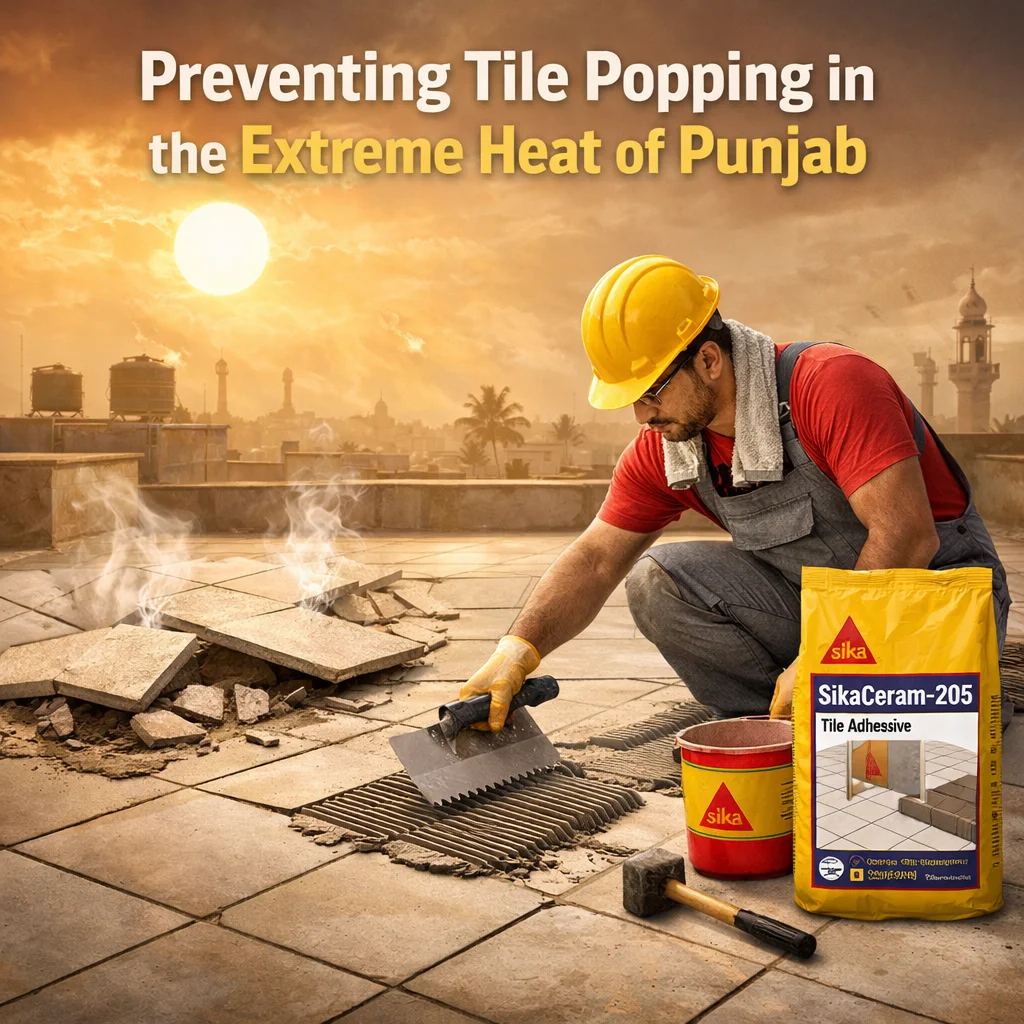
During a recent project at a client’s home in DHA, we installed 80 square meters of 80×80 cm vitrified tiles using SikaCeram-205 PK. Eight months later, after a particularly hot summer and the house settling, every single tile remained perfectly bonded. The client’s previous home, tiled with traditional cement by someone else, needed repairs within two years.
Which Sika Product for Your Project?
Not all Sika tile bonds are identical. Based on your specific needs:
For standard wall tiles in kitchens and bathrooms, SikaCeram-107 (formerly MasterTile ECO) provides excellent value with good bond strength and easy application .
For large floor tiles (up to 60×60 cm), SikaCeram-205 PK offers enhanced flexibility and higher bond strength. The 16% discount visible on your website makes this an especially attractive option right now [citation:website product grid].
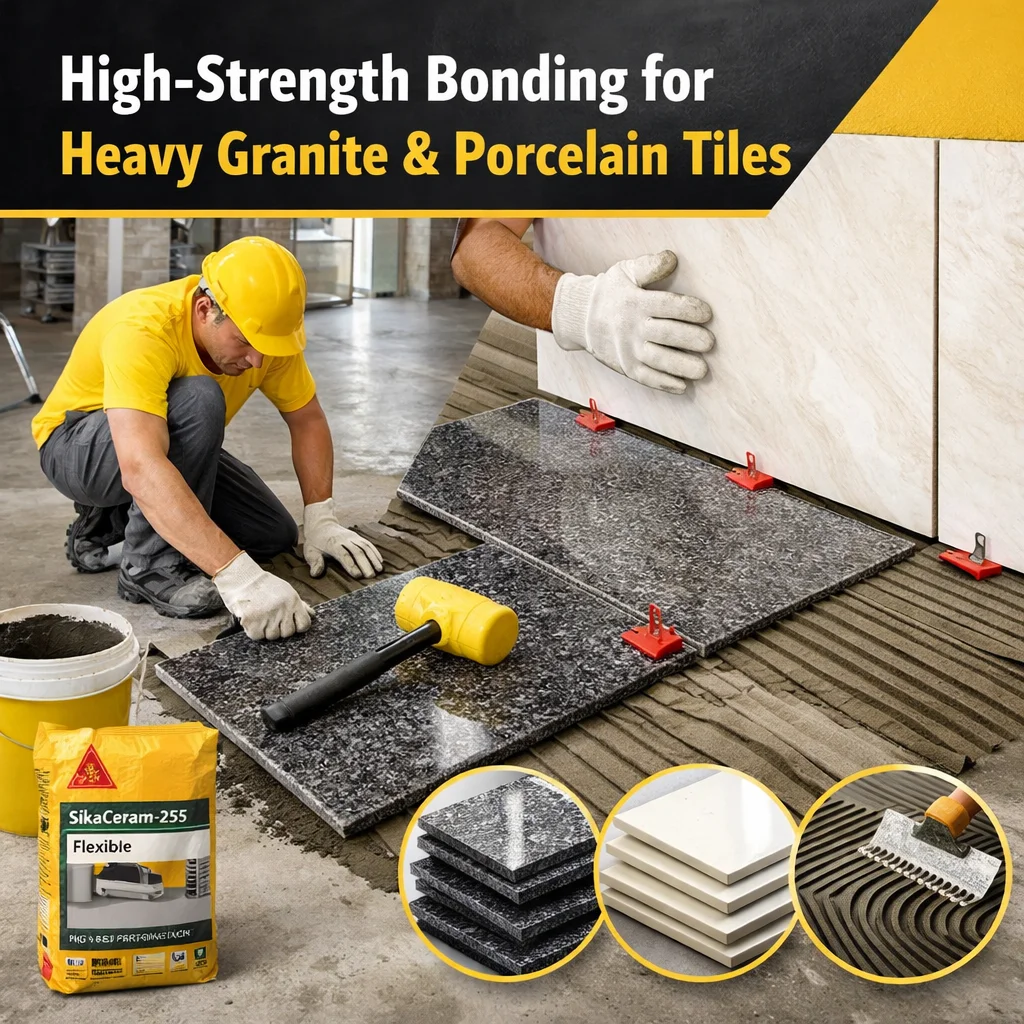
For wet areas and swimming pools, products like SikaCeram-255 or SikaTile-400 EVO PRO provide waterproof properties and withstand constant moisture exposure .
For natural stone and marble, use flexible adhesives specifically formulated for sensitive materials that might stain or crack with standard products .
Application Tips From Someone Who’s Learned the Hard Way
After watching both successful and failed installations, here’s what separates beautiful, permanent tiling from future disasters:
Surface preparation matters more than adhesive choice. Even the best Sika tile bond fails on dusty, oily, or unstable surfaces. Clean thoroughly, repair cracks, and apply primer where recommended .
Mixing ratios aren’t suggestions. Too much water weakens the bond. Too little makes application impossible. Use clean water, measure accurately, and mix thoroughly.
Back-buttering large tiles. For tiles larger than 30×30 cm, apply adhesive to both the floor and the tile back. This ensures complete coverage and eliminates hollow spots .
Respect working time. Sika adhesives typically offer 20-30 minutes of adjustability after application . Work in manageable sections, not entire rooms at once.
Wait before grouting. Walls need 4-6 hours. Floors need 24-36 hours. Swimming pools need 21 days before filling . Patience prevents problems.
The Verdict: Science Finally Caught Up with Tradition
My uncle’s bathroom eventually got fixed—with Sika tile adhesive. Those tiles have stayed put for five years now, through humid summers and everything his family throws at them. He jokes that he learned the hard way so I wouldn’t have to.
The construction industry spent decades using cement mortar because it was available and cheap, not because it was optimal. Sika’s polymer technology represents what happens when material science addresses real-world problems. Higher bond strength, flexibility, water resistance, and easier application aren’t marketing claims—they’re measurable improvements backed by testing standards like IS 15477 and EN 12004 .
For large tiles, the choice isn’t even close. Sika tile bond is better than traditional cement in every meaningful way: stronger, more reliable, easier to work with, and ultimately more economical when you factor out failure risk.
Your tiles deserve better than outdated methods. More importantly, your peace of mind deserves the certainty that comes from using products designed for modern materials and expectations.
Ready to start your tiling project with confidence? Browse our complete range of Sika tile adhesives at Sika Chemicals Pakistan. Need help selecting the right product? Our technical team is available at 03329015232 to answer your questions. Share your project details with us, and we’ll recommend the perfect solution for your specific tiles and conditions.