Table of Contents
Preparing High-Performance Concrete for Islamabad High-Rise Projects: A Blueprint for Safety and Strength
Islamabad is transforming. Drive through the Blue Area, gaze toward Gulberg Greens, or watch the skyline shift near the Margalla Hills, and you will see cranes dotting the horizon. High-rise buildings are no longer a rarity; they are becoming the capital’s new architectural identity. But as we build upward, a pressing question emerges: how do we ensure these structures stand strong for generations?
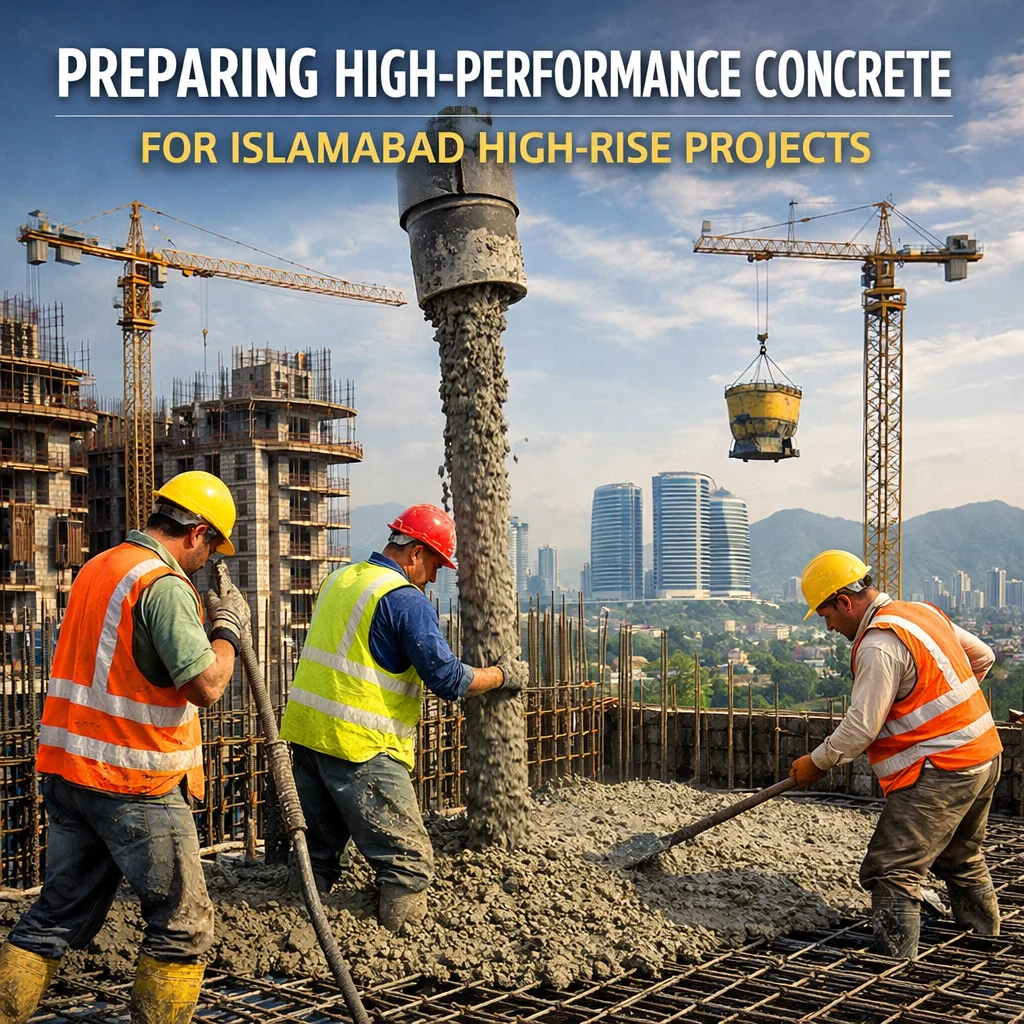
The answer lies beneath the surface—in the science of preparing high-performance concrete for Islamabad high-rise projects. This is not just about pouring cement; it is about engineering a material that can withstand seismic forces, extreme weather, and the test of time. In a city where the ground can tremble and the summer sun beats down relentlessly, ordinary concrete simply will not suffice.
Why Islamabad’s High-Rises Demand More Than Ordinary Concrete
Islamabad sits in a unique geological position. According to Pakistan’s seismic zoning map, the capital lies on the border of Zone 2B and Zone 3—areas with moderate to high seismic hazard potential . The devastating earthquake of 2005 served as a wake-up call, prompting the development of the Building Code of Pakistan: Seismic Provisions-2007, which set stricter standards for high-rise construction . Yet even today, experts warn that poor execution on site remains a significant challenge .
A recent study by NUST researchers highlighted a concerning reality: while buildings may be designed according to code, variations in concrete compressive strength due to poor quality control on site can compromise structural integrity . In other words, even the most sophisticated architectural plans are only as strong as the concrete used to execute them.
This is where high-performance concrete (HPC) becomes non-negotiable. Unlike conventional mixes, HPC is engineered for superior strength, durability, and workability. It is designed to resist weathering, chemical attacks, and the kind of stress that seismic activity imposes .
The Science Behind High-Performance Concrete
So, what makes high-performance concrete different? It is not a single formula but a carefully calibrated blend of materials and additives. The magic happens in the mix design, where every ingredient plays a critical role.
1. Cement: The Foundation
High-strength concrete typically requires 53-grade Ordinary Portland Cement (OPC) , which achieves significantly higher early strength than lower grades. This type of cement provides better mix design efficiency and can save costs by reducing overall cement consumption . For high-rise projects in Islamabad, where vertical load-bearing capacity is paramount, cement quality is non-negotiable.
2. Supplementary Cementitious Materials (SCMs)
Recent research from UET Taxila emphasizes the importance of incorporating locally sourced SCMs such as fly ash or micro-silica. These materials initiate pozzolanic reactions that enhance the concrete’s microstructure, leading to increased long-term strength and reduced permeability . This is particularly valuable in high-rise construction, where durability against moisture ingress can prevent rebar corrosion over decades.
A concrete mix containing micro-silica can achieve compressive strengths exceeding 35 MPa within 28 days—a benchmark often required for structural reinforced concrete .
3. Superplasticizers: The Game-Changer
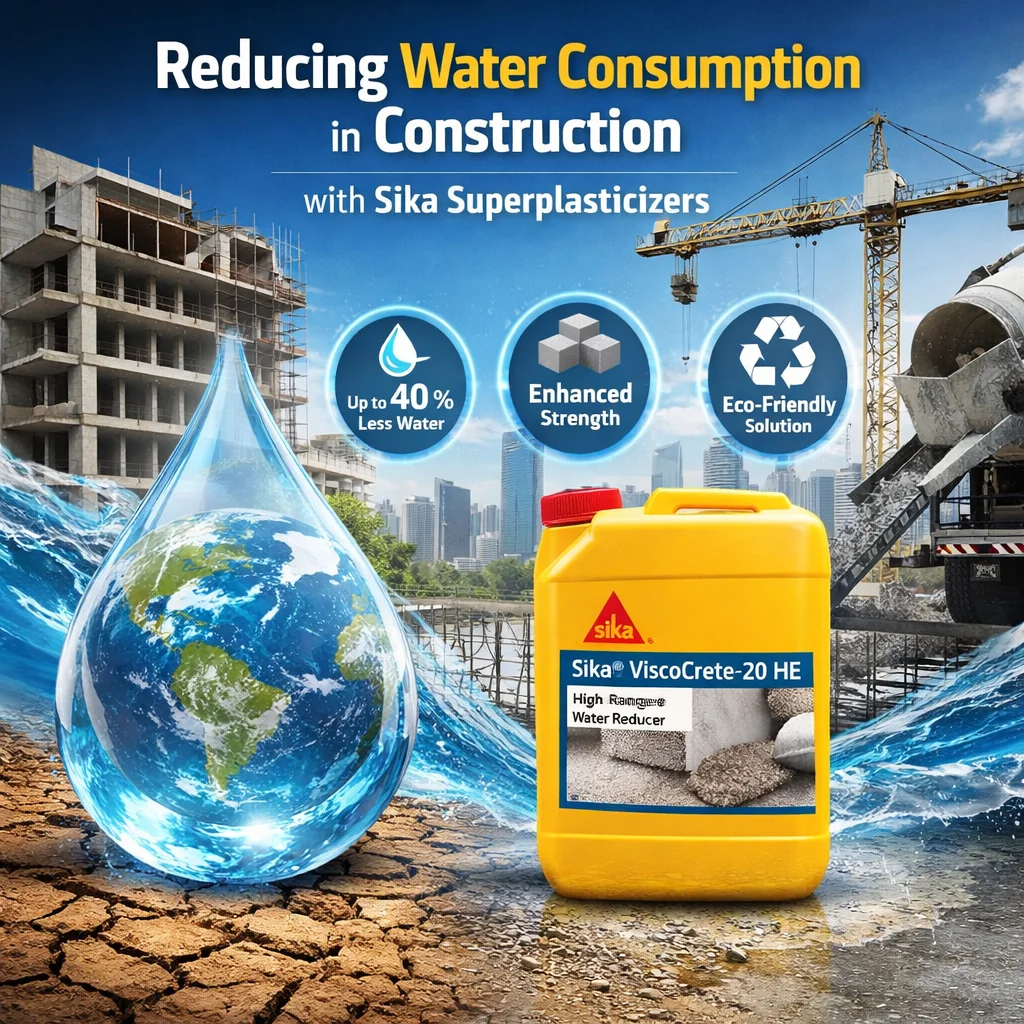
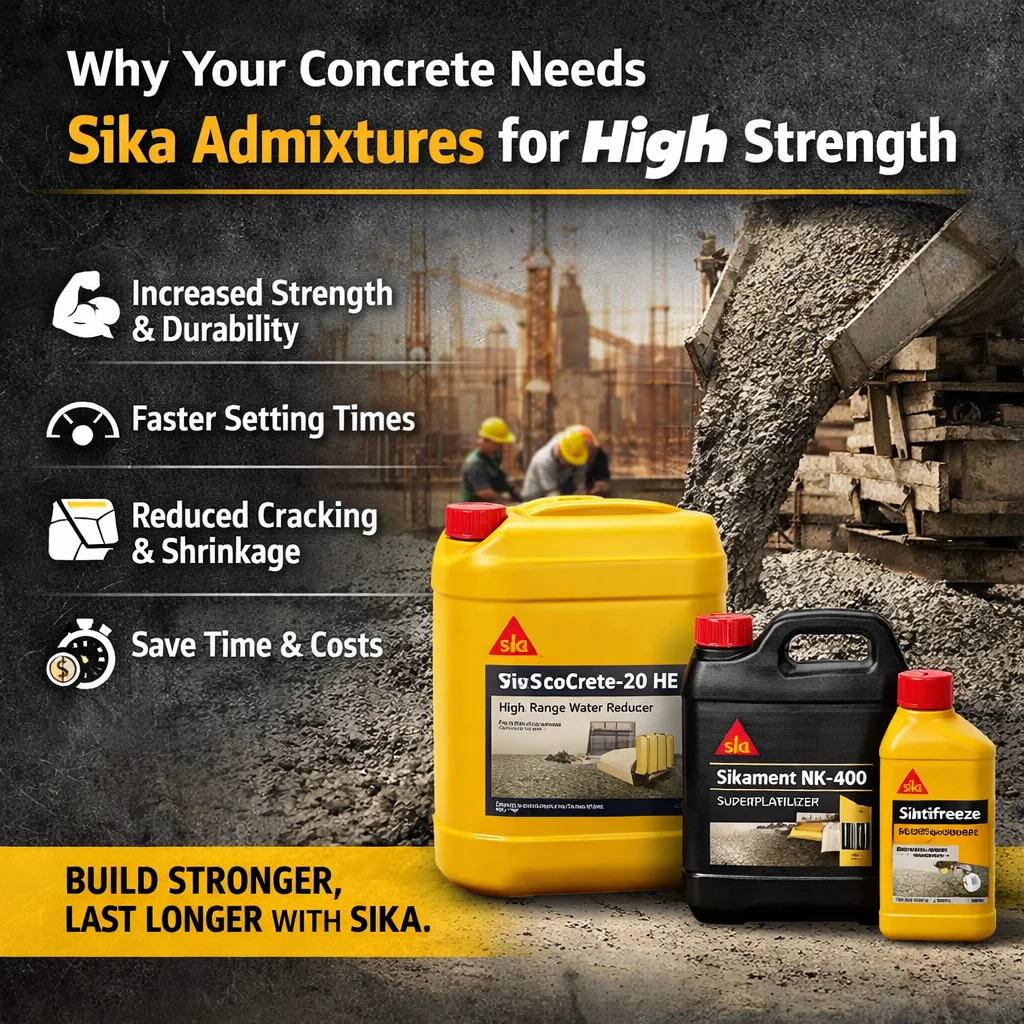
This is where modern chemistry transforms ordinary concrete into high-performance material. Polycarboxylate-based superplasticizers, such as SikaPlast®-400 PK, work by adsorbing to cement particles and creating electrostatic repulsion that dramatically improves flow without increasing water content .
Why does this matter? In high-rise construction, concrete often needs to be pumped to significant heights. A mix with high slump retention ensures workability remains consistent from the batching plant to the 30th floor. Without superplasticizers, achieving the required workability would mean adding more water—which would compromise strength. These admixtures allow for water reduction of up to 30% while maintaining or even increasing strength .
4. Water-to-Cement Ratio: The Golden Rule
For structural concrete in high-rises, international standards like Aramco specifications demand a water-to-cement ratio of ≤ 0.4 . This is a critical parameter. Too much water creates voids that weaken the concrete; too little makes it unworkable. Achieving this balance requires precise batching and real-time adjustments based on site conditions.
Real-World Application: Learning from Islamabad’s Construction Sites
Theory is essential, but practice reveals the real challenges. In December 2024, civil engineering students from COMSATS University visited a high-rise project at Mount Khalid, Gulberg Greens, Islamabad. The insights from that visit are instructive for anyone involved in preparing high-performance concrete for Islamabad high-rise projects.
The project team emphasized several key practices:
- Micro-silica integration was used to achieve high-strength concrete suitable for shear walls and core walls—the structural backbone of any tall building .
- On-site batching plants with 1m³ capacity allowed for better quality control compared to relying solely on ready-mix suppliers.
- Material testing laboratories were operational on-site, where concrete cylinders were regularly tested to verify design strength. This kind of real-time quality assurance is what separates reliable construction from risky shortcuts .
The students also observed the use of EPS panels for lightweight, cost-effective construction—a reminder that high-rise building involves balancing strength with overall structural efficiency .
The Quality Control Challenge
Perhaps the most sobering finding from recent research is the gap between design and execution. A NUST study analyzing test results from structural labs in Islamabad found significant variation in compressive strength due to poor execution practices . This includes issues like:
- Improper mixing and discharge times—concrete that exceeds 90 minutes or 300 drum revolutions after water addition should be rejected .
- Inadequate curing—especially critical in Islamabad’s hot summers, where rapid drying can lead to plastic shrinkage cracks.
- Inconsistent batching—without precise measurement, water-to-cement ratios drift, compromising strength.
The study concluded that while code-compliant structures have some built-in redundancy to handle minor variations, this should never be relied upon as a crutch. Quality control is not optional; it is structural.
Best Practices for Preparing High-Performance Concrete
Drawing from international standards like ASTM C94 and Aramco specifications, here is a practical checklist for contractors and developers working on Islamabad high-rises:
Pre-Pour Requirements
- Batch ticket verification: Every load must include plant name, mix design number, cement and admixture types, water content, and drum revolutions .
- Slump testing: For structural concrete, target slump should typically be between 110–190mm, depending on placement method .
- Temperature control: Concrete temperature should stay between 16–35°C for structural elements. In Islamabad’s summer, this may require using chilled water or ice in the mix .
During Placement
- Pumping considerations: High-rise pumping requires mixes with adequate cohesion to prevent segregation. Superplasticizers help, but trial mixes are essential .
- Consistency monitoring: Slump loss over time must be tracked; adjustments should use only water or water-reducing admixtures within manufacturer limits.
Post-Pour Essentials
- Curing: Proper curing is non-negotiable. Use Sika® Antisol® curing compounds or wet hessian to prevent moisture loss, especially in hot weather .
- Strength verification: Test cylinders should be cast on-site and tested at 7, 14, and 28 days to confirm design strength.
The Role of Trusted Partners
Sika Chemicals has been at the forefront of concrete technology for over a century. In Pakistan, Sika’s authorized distributors like MCT Chemicals provide not only high-quality admixtures but also technical support to help contractors optimize mix designs for local conditions .
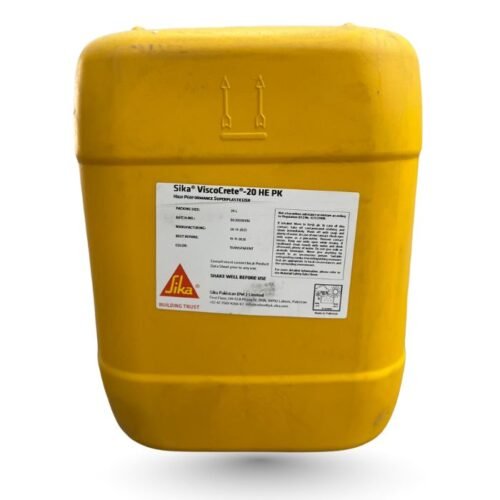
Whether it is SikaPlast®-400 PK for high-flow, high-strength concrete, or Sika ViscoCrete® for superior water reduction, the right admixture can make the difference between a structure that merely stands and one that truly endures. Sika products comply with international standards like ASTM C494 and EN 934-2, ensuring that the chemistry behind your concrete meets global benchmarks .
Looking Ahead: The Future of High-Rise Construction in Islamabad
As Islamabad continues to grow upward, the construction industry must evolve alongside it. The Building Code of Pakistan provides the framework, but true safety lies in meticulous execution—from mix design to batching to placement and curing.
Emerging research at institutions like NUST is exploring advanced materials such as Engineered Cementitious Composites (ECC) and 3D-printed concrete, which could revolutionize how we build . But for today’s projects, the fundamentals remain: quality materials, precise mix design, and rigorous quality control.
Conclusion: Building Beyond Standards
Preparing high-performance concrete for Islamabad high-rise projects is not merely a technical exercise—it is a responsibility. Every tower that rises against the Margalla skyline will house families, businesses, and dreams. The concrete that forms its skeleton must be worthy of that trust.
By embracing advanced admixtures, adhering to strict quality control protocols, and learning from both successes and failures, Pakistan’s construction industry can deliver high-rises that are not just tall, but truly resilient. The technology exists. The expertise is available. The question is whether we will choose to apply it consistently.
Ready to ensure your next project meets the highest standards? Whether you are planning a high-rise development or seeking expert guidance on concrete mix optimization, Sika Chemicals and our authorized distributors are here to help. Contact our technical team to discuss your project requirements, or visit our Islamabad office to explore our range of high-performance concrete admixtures. Let’s build stronger, together.