Table of Contents
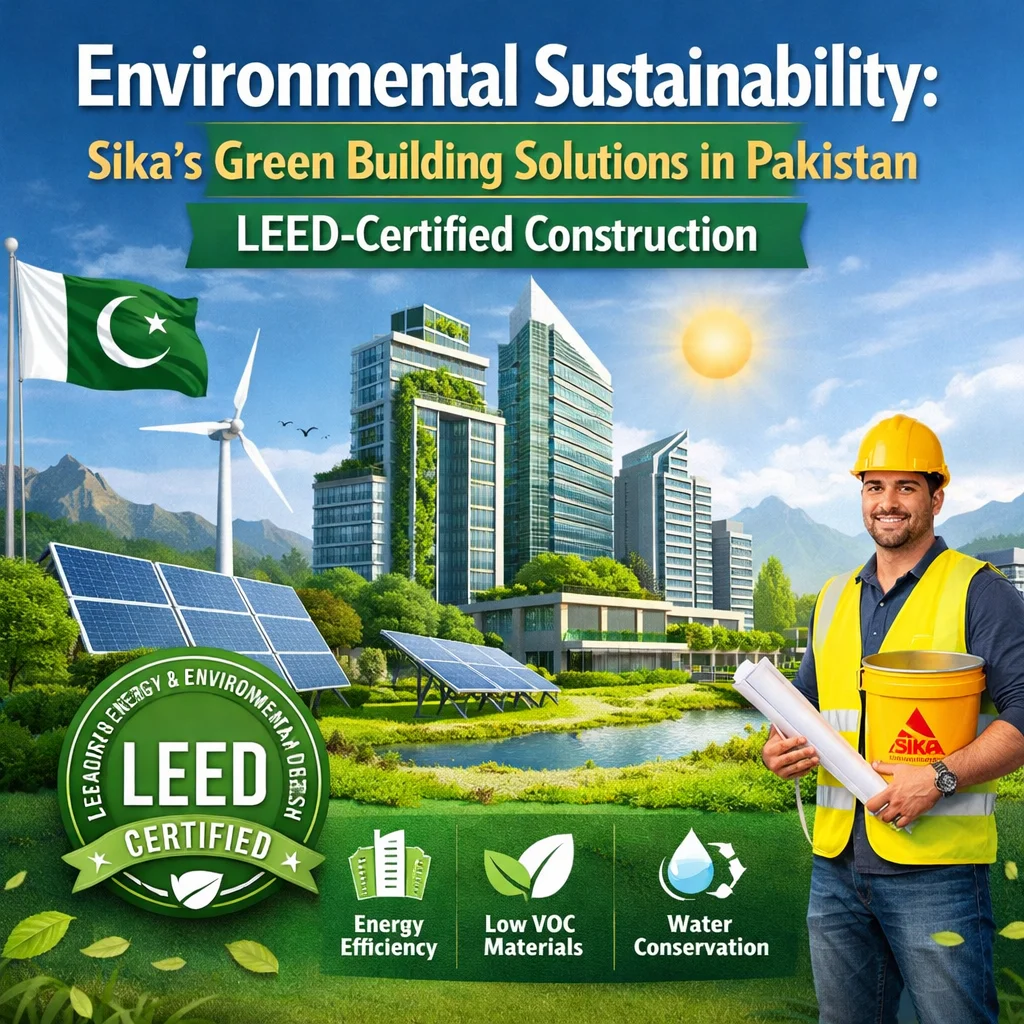
Environmental Sustainability: Sika’s Green Building Solutions in Pakistan
Picture this: a construction site in Lahore where the factory producing essential building materials saves 50% more water than any similar facility in the country. This isn’t a future fantasy—it’s been happening since 2017. While Pakistan’s construction industry grapples with water scarcity, rising material costs, and mounting environmental concerns, one company has quietly been proving that sustainable construction isn’t just possible—it’s profitable.
Environmental Sustainability: Sika’s Green Building Solutions in Pakistan represent a fundamental shift in how we approach construction in a country where the industry contributes significantly to carbon emissions and resource depletion. But here’s what makes this story compelling: the solutions aren’t about sacrifice; they’re about smarter building.
A Milestone in Green Construction: Pakistan’s First LEED-Certified Plant
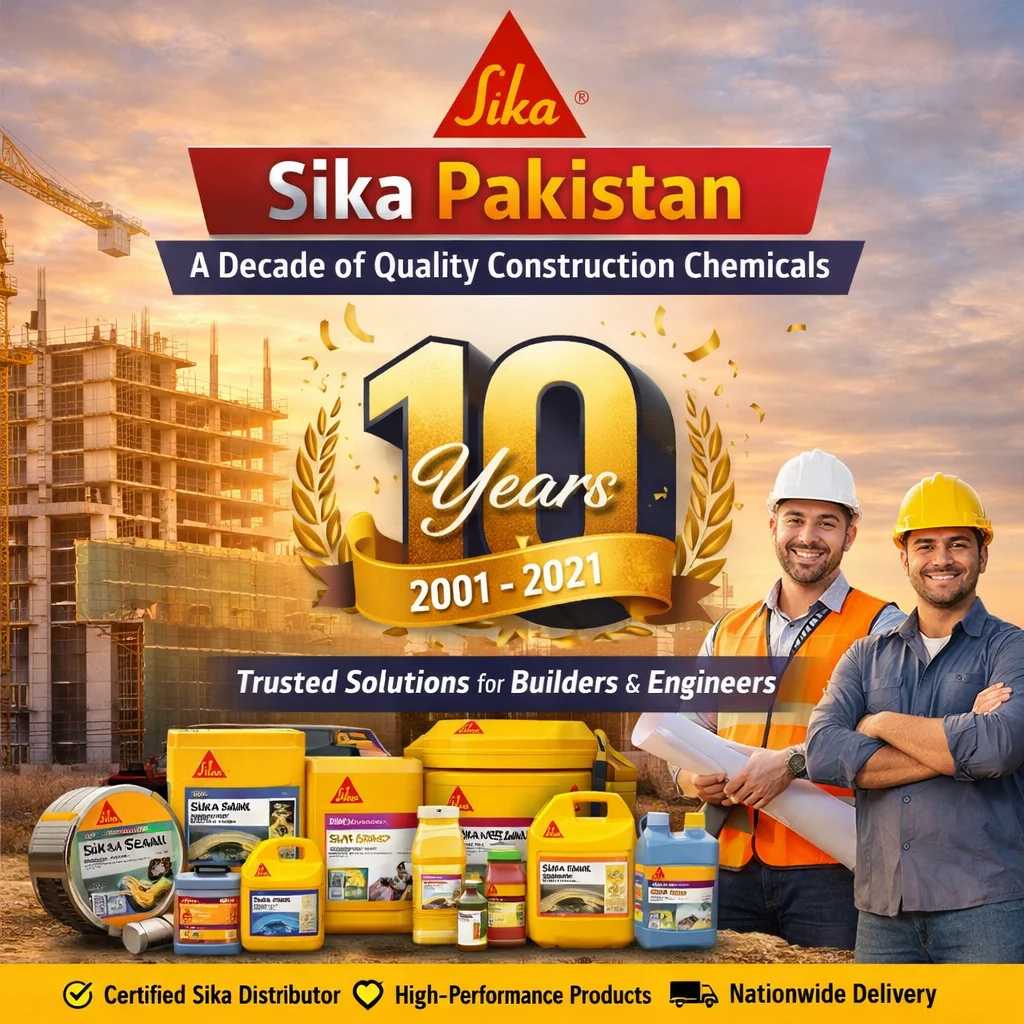
Let’s start with a fact that deserves attention. In November 2017, Sika Pakistan inaugurated the country’s first-ever LEED-certified construction chemical manufacturing facility at Sundar Industrial Estate in Lahore . This wasn’t just a ribbon-cutting ceremony—it was a statement.
Built with an investment of 5 million Swiss francs, this fully automated facility achieved LEED Gold certification under the NC 2009 rating system . To understand what this means, LEED (Leadership in Energy and Environmental Design) is the world’s most recognized green building certification system, developed by the U.S. Green Building Council and used globally across Asia, Europe, and the Americas .
The plant’s environmental performance metrics tell the real story:
- 20% energy savings compared to conventional industrial facilities
- 50% water consumption reduction
- 30% better indoor air quality
These aren’t incremental improvements. They represent a fundamental rethinking of how industrial facilities can operate in Pakistan’s resource-constrained environment.
Switzerland’s Ambassador to Pakistan, Thomas Kolly, noted at the inauguration that the facility reflected the trust Swiss companies place in Pakistan’s business environment . But perhaps more significant was Sika Pakistan CEO Naveed Chaudhry’s comment: “We are hoping to create new and happy Pakistan for our next generation” .
Beyond the Factory: How Admixtures Transform Building Sustainability
The green building conversation often focuses on solar panels and energy-efficient windows. But what about the concrete—the material that forms the skeleton of our buildings? Concrete production accounts for approximately 8% of global CO₂ emissions, primarily from cement manufacturing.
This is where Sika’s concrete admixture technology becomes a game-changer for Environmental Sustainability: Sika’s Green Building Solutions in Pakistan.
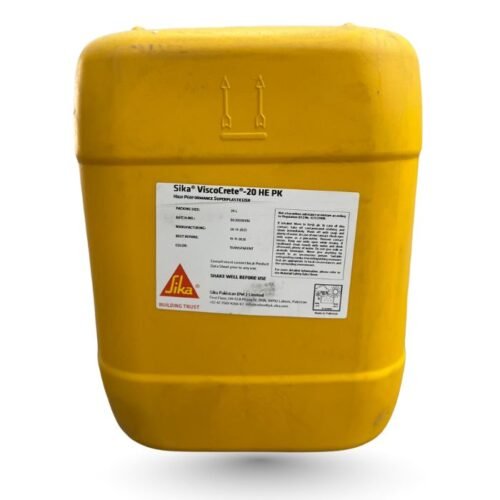
Take the Sika ViscoCrete range, based on polycarboxylate ether (PCE) technology. These superplasticizers can reduce water content in concrete mixes by up to 30% while maintaining workability . The implications are enormous:
- Less water consumption on construction sites
- Stronger, more durable concrete that lasts longer
- Reduced cement content to achieve the same strength
Here’s the innovation that deserves attention: Sika has developed bio-based superplasticizers where over 85% of crude oil-based raw materials are replaced with agricultural by-products . This means the very chemistry of construction is shifting from petroleum dependence to renewable resources.
MCT Chemicals, an authorized wholesaler for Sika Pakistan, explains the practical impact: “By using high-performance water reducers, we can achieve the same target strength with a lower cement content. This makes the project more cost-effective and environmentally friendly by reducing the carbon footprint” .
The Diamer Basha Dam: Digital Tools for Sustainable Construction
Theory meets practice at the Diamer Basha Dam project in Gilgit Baltistan—a massive infrastructure undertaking that will provide 4,500 MW of clean energy through 12 turbines . With 17 million cubic meters of roller-compacted concrete and an additional 2 million cubic meters of conventional concrete required, this project could have been a sustainability nightmare.
Instead, it became a showcase for how digital tools enable sustainable construction.
Sika Pakistan deployed two innovative applications: the Sika Sand App and the Sika Concrete Mix Design App. These mobile tools allowed engineers to analyze aggregate quality and optimize mix designs in real-time. The result? The number of trial mixes dropped from 15 to just 3 .
Think about what this means for sustainability. Fewer trial mixes mean:
- Less material waste
- Reduced energy consumption from repeated mixing
- Faster project timelines with lower carbon footprint
- Optimized use of local materials
The project utilizes Sika ViscoCrete superplasticizers and Sigunit alkali-free accelerators—products specifically designed to reduce environmental impact while maintaining performance .
Global Standards, Local Impact: Understanding Green Building Certifications
For Pakistani developers and contractors unfamiliar with green building standards, the landscape can seem confusing. What’s the difference between LEED and BREEAM? Which certification matters for your project?
Sika actively participates in major green building initiatives worldwide, making their expertise invaluable for Pakistani projects pursuing certification :
| Certification | Focus | Relevance to Pakistan |
|---|---|---|
| LEED | Energy efficiency, water use reduction, materials selection | Most widely used; Sika’s Lahore plant achieved LEED Gold |
| BREEAM | Overall building performance, LCA-based assessment | Strong in Europe; applicable for projects with international standards |
| Green Star | Environmental impact categories | Leading in Australia, South Africa; gaining recognition in Pakistan |
The common thread across all these systems is the requirement for materials that demonstrate environmental responsibility. Sika’s products, from waterproofing membranes to flooring systems, are engineered to contribute points toward these certifications.
Practical Sustainability: What Sika Products Deliver
Let’s move beyond certifications and talk about what actually happens on construction sites. Environmental Sustainability: Sika’s Green Building Solutions in Pakistan manifest through specific products designed for local conditions.
Waterproofing That Lasts
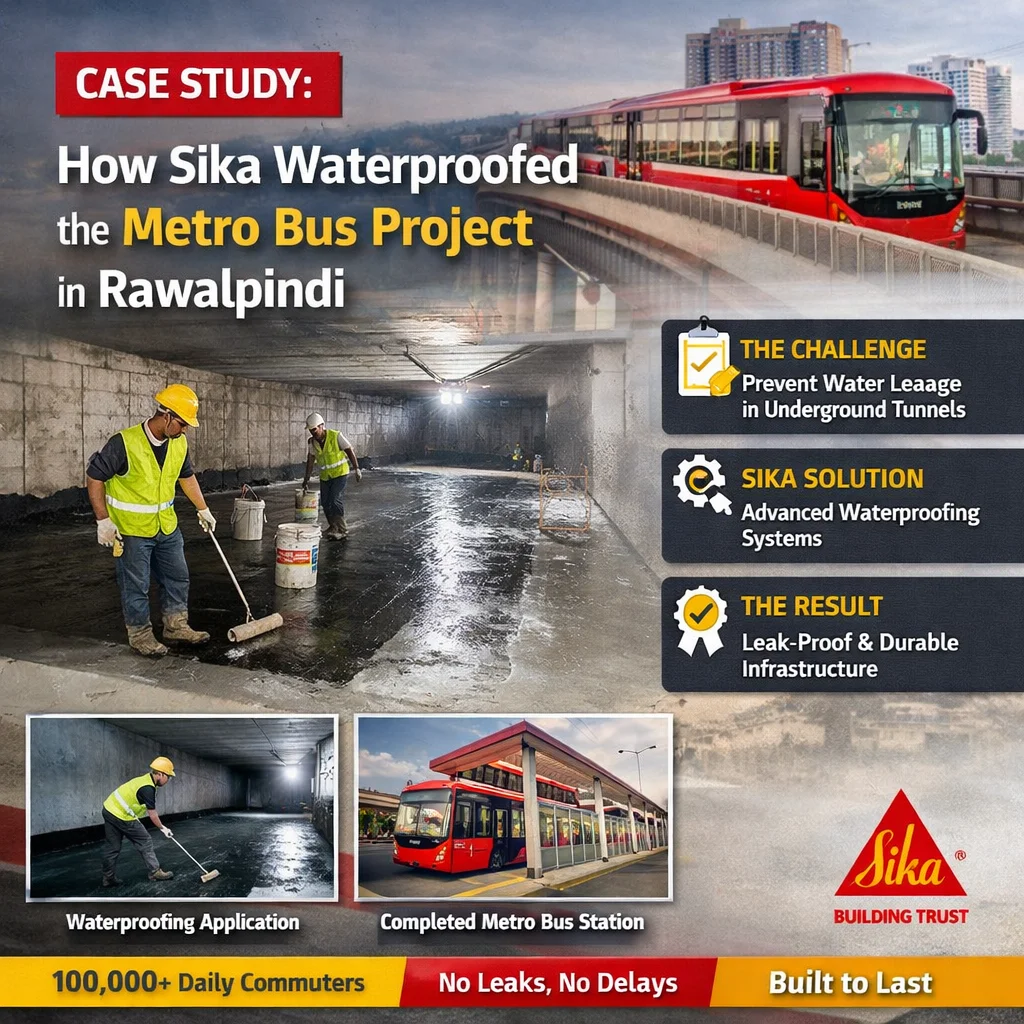
Water ingress is the primary cause of structural decay in Pakistan’s climate, leading to rebar corrosion and building failure . Sika’s cementitious waterproofing systems, such as Sika-1, are mixed directly into concrete to block pores internally. Unlike surface coatings that degrade over time, these integral solutions provide permanent protection with a service life of 10-25 years depending on the system .
Flooring Systems for Longevity
Industrial and commercial floors in Pakistan face extreme conditions—heavy loads, chemical spills, high temperatures. Sika’s epoxy and polyurethane flooring systems create seamless, non-porous surfaces that resist impact and prevent dusting . A floor that lasts 20 years instead of 5 represents a massive reduction in material consumption and waste.
Grouting and Anchoring for Structural Integrity
When heavy machinery needs precision leveling or structural connections require absolute stability, non-shrink grouts like SikaGrout eliminate the voids that cause structural failure . This isn’t just about safety—it’s about buildings that don’t need premature repair or replacement.
The Economics of Green Building
Here’s where the conversation needs to get practical. Developers in Pakistan often hesitate to adopt sustainable practices, assuming they’ll increase costs. The evidence suggests otherwise.
The Sika Lahore plant demonstrates that resource efficiency translates to operational savings. Fifty percent less water consumption isn’t just good for the environment—it’s good for the bottom line in a country facing water scarcity.
On construction sites, admixtures like ViscoCrete allow for lower cement content. Cement is expensive. Reducing cement while maintaining strength means direct material cost savings.
The Diamer Basha Dam project showed that digital optimization reduced trial mixes from 15 to 3—meaning less time, less material waste, and faster approval processes .
Looking Ahead: The Future of Sustainable Construction in Pakistan
The construction industry in Pakistan stands at a crossroads. Urbanization continues at a rapid pace, with housing shortages and infrastructure demands driving unprecedented building activity. The question is whether this growth will follow the resource-intensive patterns of the past or embrace sustainable practices.
Sika’s presence in Pakistan—with local manufacturing, LEED-certified facilities, and a commitment to innovation—suggests the latter is possible. The company’s global sustainability strategy focuses on improving material, water, and energy efficiency throughout the supply chain . In Pakistan, this translates to products designed for local conditions, manufactured locally, with global environmental standards.
The bio-based superplasticizers now available globally represent the next frontier—construction chemicals derived from agricultural waste rather than petroleum . When these products reach Pakistan’s market, they’ll further reduce the carbon footprint of concrete construction.
Conclusion: Building Better, Building Smarter
Environmental Sustainability: Sika’s Green Building Solutions in Pakistan isn’t about adding expensive green features to conventional buildings. It’s about fundamentally rethinking how we approach construction—from the chemistry of concrete to the operation of manufacturing facilities.
The LEED-certified plant in Lahore proves that industrial facilities can achieve world-class environmental performance in Pakistan. The Diamer Basha Dam demonstrates that digital tools can optimize material use on massive infrastructure projects. And the range of admixtures, waterproofing systems, and flooring solutions shows that sustainability can be embedded in every aspect of construction.
For developers, contractors, and homeowners in Pakistan, the choice is increasingly clear: build with materials and methods that will last, consume fewer resources, and contribute to a more sustainable future. Or continue with conventional approaches that cost more in the long run—both financially and environmentally.
The technology exists. The expertise is available. The only question is how quickly Pakistan’s construction industry will embrace the shift toward genuine sustainability.
Ready to incorporate sustainable building solutions into your next project? Sika Chemicals Pakistan offers a complete range of green building products and expert technical support. Whether you’re planning a residential development, commercial complex, or infrastructure project, our team can help you achieve your sustainability goals without compromising performance or budget.
Contact our technical support team to discuss your project requirements, or visit our Lahore facility to see sustainable manufacturing in action.