Table of Contents
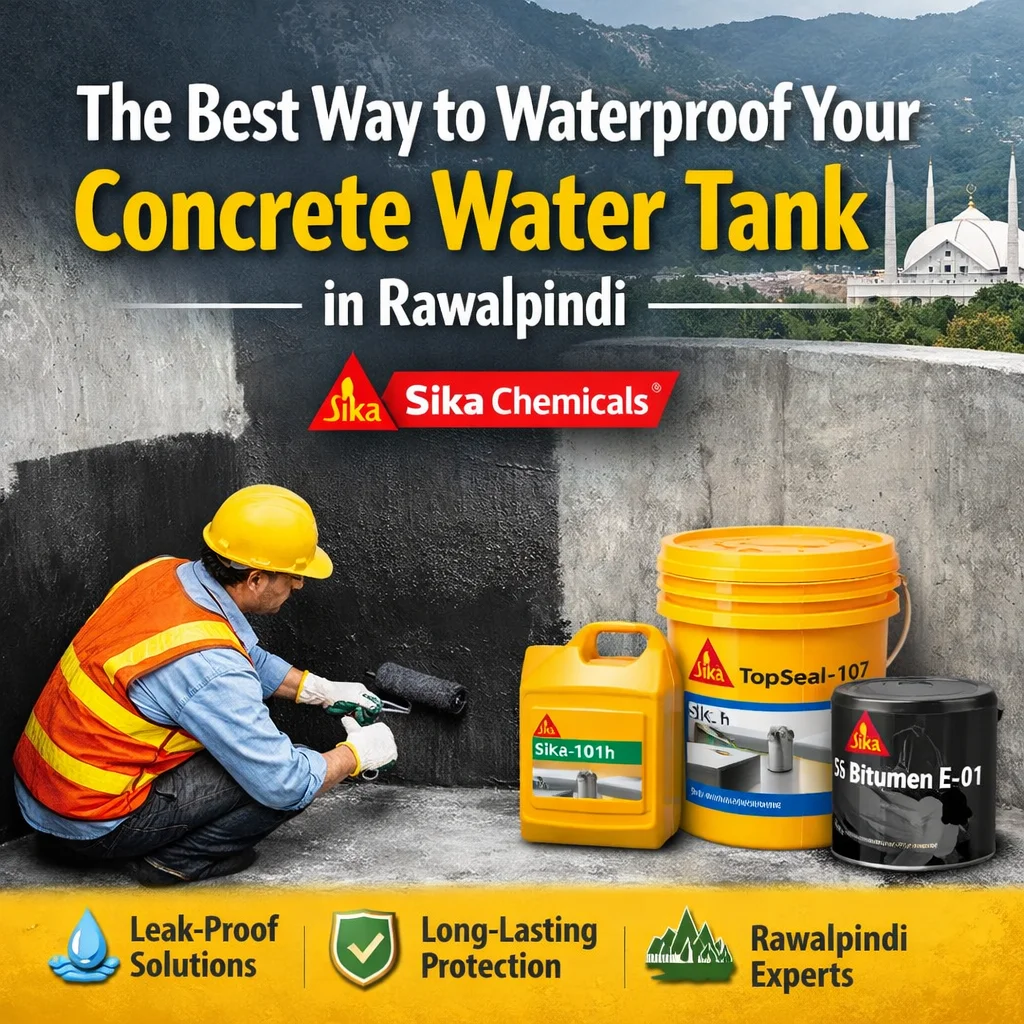
The Best Way to Waterproof Your Concrete Water Tank in Rawalpindi
Why Your Water Tank Deserves Better Than a Quick Fix
There’s something deeply frustrating about walking past your brand-new concrete water tank only to notice that telltale dark patch of dampness spreading across the exterior. Or worse—hearing that dreaded drip-drip-drip sound in the middle of the night when you know every drop of water counts during Rawalpindi’s scorching summers.
I learned this lesson the hard way. Two years ago, a client in Westridge called me in despair. His six-month-old overhead water tank was already leaking, and the beautiful ceramic tile work in his bathrooms was showing ugly yellow stains from constant seepage. We ended up breaking walls, replacing tiles, and essentially rebuilding half his bathroom. All because the best way to waterproof your concrete water tank wasn’t followed during construction.
If you’re building a new home in Rawalpindi or dealing with an existing leaky tank, this guide will save you from making the same costly mistakes.
Understanding the Challenge: Rawalpindi’s Unique Conditions
Before diving into solutions, let’s talk about what makes water tank waterproofing in Rawalpindi particularly challenging. Our city sits on varied soil conditions, experiences extreme temperature fluctuations from scorching summers to chilly winters, and faces monsoon rains that test every square inch of our construction.
Concrete water tanks face two distinct enemies depending on where they’re located :
For underground tanks, the enemy is external. When you empty your tank for cleaning, groundwater pressure from the surrounding soil tries to push moisture into your tank. The waterproofing layer must withstand this negative pressure and stay firmly bonded to the walls .
For overhead tanks, the enemy is movement. Your tank expands in the afternoon heat and contracts at night. This constant flexing requires a waterproofing solution that moves with your tank, not one that cracks under pressure .
The Best Way to Waterproof Your Concrete Water Tank: A Step-by-Step Approach
Step 1: Start with the Concrete Itself
Here’s something many contractors won’t tell you—the best waterproofing starts inside your concrete, not on its surface. When casting your water tank, using a concrete waterproofing admixture creates an internal barrier that blocks water pathways through pores and micro-cracks .
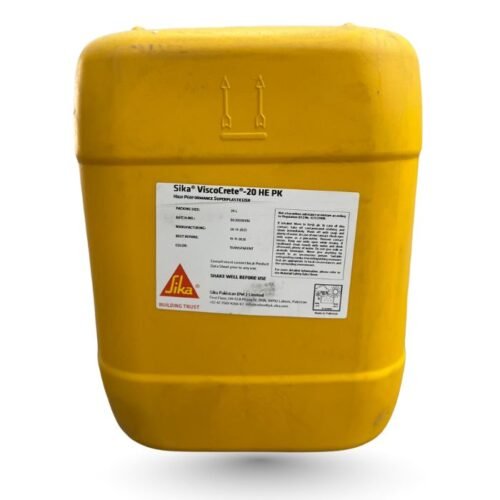
Products like plasticizing admixtures added at 0.2-0.5% of cement weight during mixing make the concrete denser and less permeable from the very beginning . Think of it as giving your tank a strong immune system before applying external protection.
I recently worked with a contractor in Chaklala who insisted on this approach for a large residential project. “Bhai,” he told me, “surface treatment without internal protection is like wearing a raincoat with no buttons—looks good but fails when it matters.” He wasn’t wrong.
Step 2: Choose Between Rigid and Flexible Systems
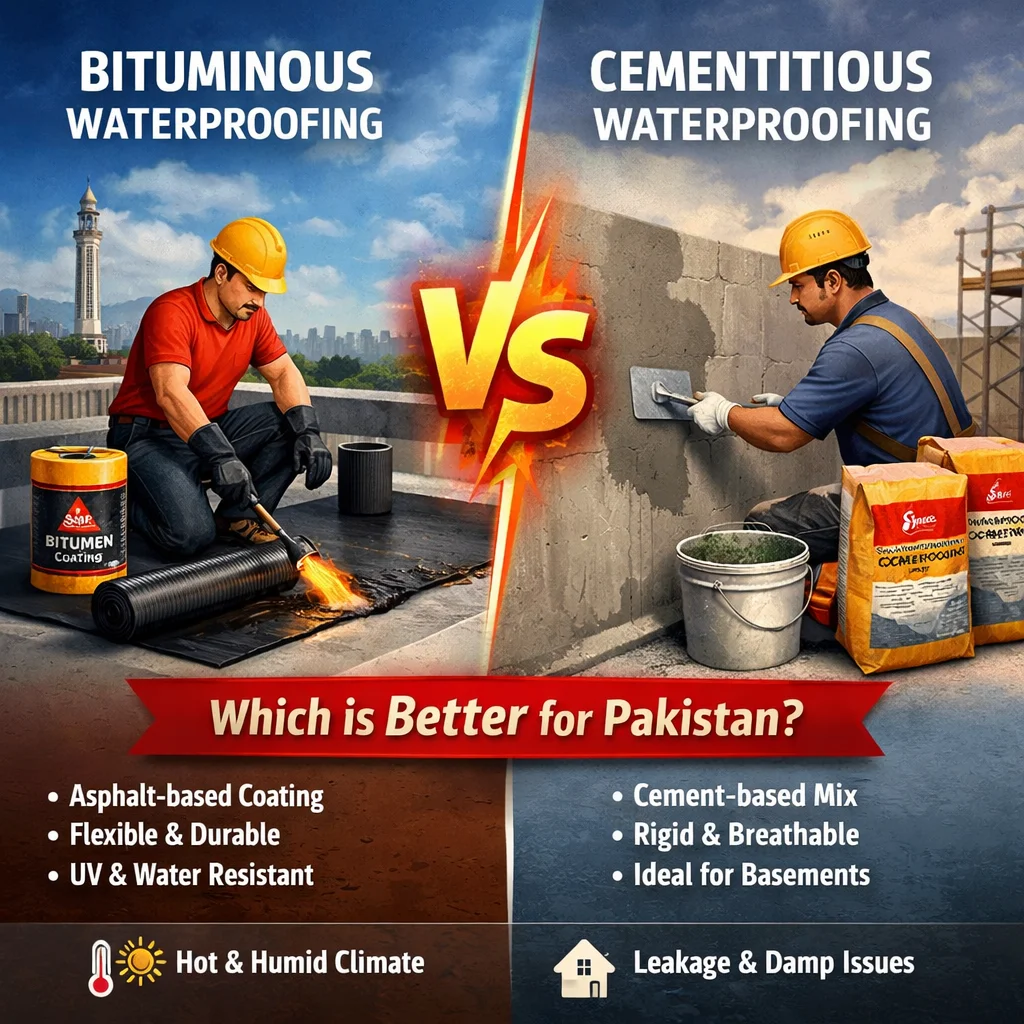
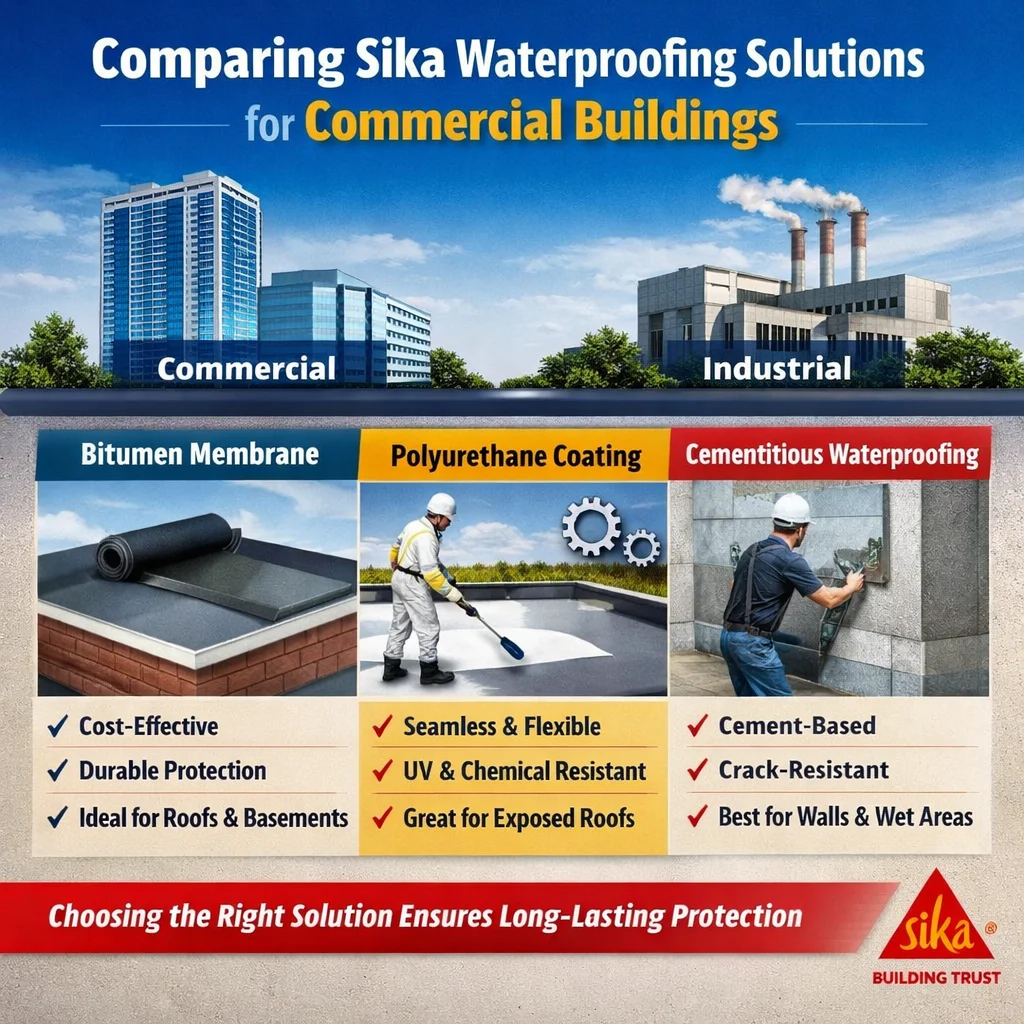
This decision determines whether your waterproofing lasts five years or twenty-five. For underground tanks where external water pressure is the concern, a rigid cementitious coating often works perfectly . These systems chemically bond with concrete, filling pores and capillaries to create a dense, monolithic barrier .
For overhead tanks exposed to temperature swings, you need flexibility. Elastic cementitious slurries can bridge cracks up to certain widths while maintaining their waterproofing integrity . These two-component systems combine cement powder with liquid polymers, creating a membrane that moves with your tank’s natural expansion and contraction .
Step 3: Master the Surface Preparation
I cannot overemphasize this—surface preparation determines 80% of your waterproofing success. Here’s what proper preparation looks like:
- Clean the surface thoroughly of oil, grease, dust, and loose particles
- Cut back any protruding wire ties or reinforcement bars at least 3cm deep
- Open construction joints in a V-shape along their entire length
- Dampen the surface thoroughly without leaving standing water
Any gaps or honeycombing in the concrete must be filled with polymer-modified repair mortar before waterproofing begins . Skipping this step guarantees future leaks.
Step 4: Apply with Precision
The actual application requires patience and attention to detail. For cementitious coatings, plan for 3-4 thin layers rather than one thick coat. Each layer should be no more than 1mm thick and applied only after the previous layer has dried .
The total consumption typically ranges from 3-4 kg per square meter, with deeper tanks requiring more material to handle increased water pressure .
For flexible systems like Sikalastic-1K, the beauty lies in their ability to bridge future cracks while maintaining adhesion to damp substrates . These can be applied by brush or trowel and offer good sag resistance even on vertical surfaces.
A Comparison: Waterproofing Options for Rawalpindi Homes
The Potable Water Consideration
If your tank stores drinking water—and most household tanks do—you must ensure your waterproofing materials are safe for potable water contact. Many quality systems carry specific approvals for this purpose .
I once had a client in Saddar who used a cheap bitumen-based coating inside his water tank. The water developed an awful taste, and his family suffered from stomach issues for weeks before we traced the problem. Don’t compromise on this—always verify that your chosen system is certified for drinking water applications .
Common Mistakes That Ruin Waterproofing
Mistake #1: Rushing the curing process. Cementitious waterproofing needs proper curing to develop its full properties. Most systems require 5-7 days before flood testing and a full 28 days to reach complete maturity .
Mistake #2: Ignoring the wall-floor junction. The intersection where tank floor meets walls is the most vulnerable point. This area should be sealed along its entire length with polymer-modified mortar, forming a 5-6cm triangular groove for reinforcement .
Mistake #3: Applying in wrong conditions. Waterproofing applied below 5°C or in direct sunlight won’t perform as intended . Plan your application for mild weather conditions.
The Sika Chemicals Advantage
At Sika Chemicals Pakistan, we’ve helped thousands of Rawalpindi homeowners solve their water tank leakage problems permanently. Our range includes:
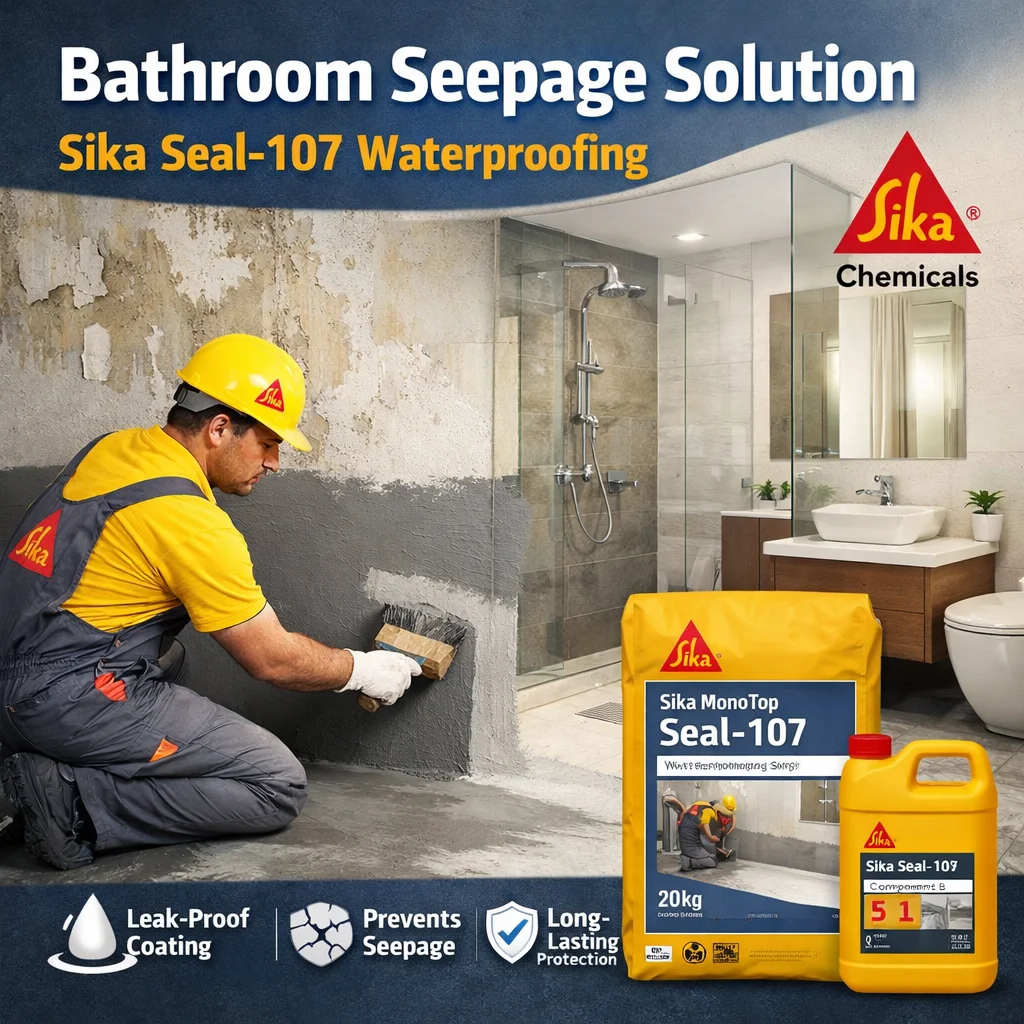
- SikaTop Seal-107: A two-component polymer-modified cementitious coating ideal for potable water tanks, providing rigid waterproofing with excellent adhesion
- Sikalastic-1K: For overhead tanks requiring flexibility and crack-bridging capability
- Plastiproof: A plasticizing admixture for new tank construction that reduces concrete permeability from within
What sets Sika apart isn’t just the products—it’s the decades of research behind them. Every Sika waterproofing solution is engineered to perform under real-world conditions, tested against international standards, and backed by technical experts who understand Pakistani construction challenges.
Real Results from Rawalpindi
Just last month, we completed a water tank waterproofing project for a client in Bahria Town Phase 8. His overhead tank had been leaking for two years, damaging the exterior finish and causing constant tension in the household. Using a flexible cementitious system applied in three precise coats after proper surface preparation, we transformed that tank into a completely watertight structure.
“We should have done this years ago,” he told me after the monsoon passed with zero leakage. “The peace of mind alone is worth every rupee.”
Your Action Plan for a Leak-Free Water Tank
Whether you’re building a new home or fixing an existing tank, here’s your roadmap:
- For new construction: Include a waterproofing admixture in your concrete mix from day one
- Assess your tank type: Underground needs rigid systems; overhead needs flexibility
- Invest in proper surface preparation: This isn’t the place to cut corners
- Choose certified materials: Verify potable water approval for drinking water tanks
- Follow application guidelines precisely: Thin coats, proper curing, correct conditions
- Work with experienced applicators: The best product fails in inexperienced hands
Ready to Solve Your Water Tank Problems Forever?
Don’t wait until that small damp patch becomes a major bathroom renovation. The best way to waterproof your concrete water tank is to do it right the first time—with quality materials, proper preparation, and expert guidance.
At Sika Chemicals Pakistan, we’re here to help you make informed decisions. Our team can recommend the right products for your specific situation, connect you with experienced applicators in Rawalpindi, and provide the technical support you need for lasting results.
Contact us today at 03329015232 or visit our store to discuss your water tank waterproofing project. Let’s build stronger, last longer—together.