Table of Contents
Preventing Tile Popping in the Extreme Heat of Punjab: A Homeowner’s Guide to Lasting Floors
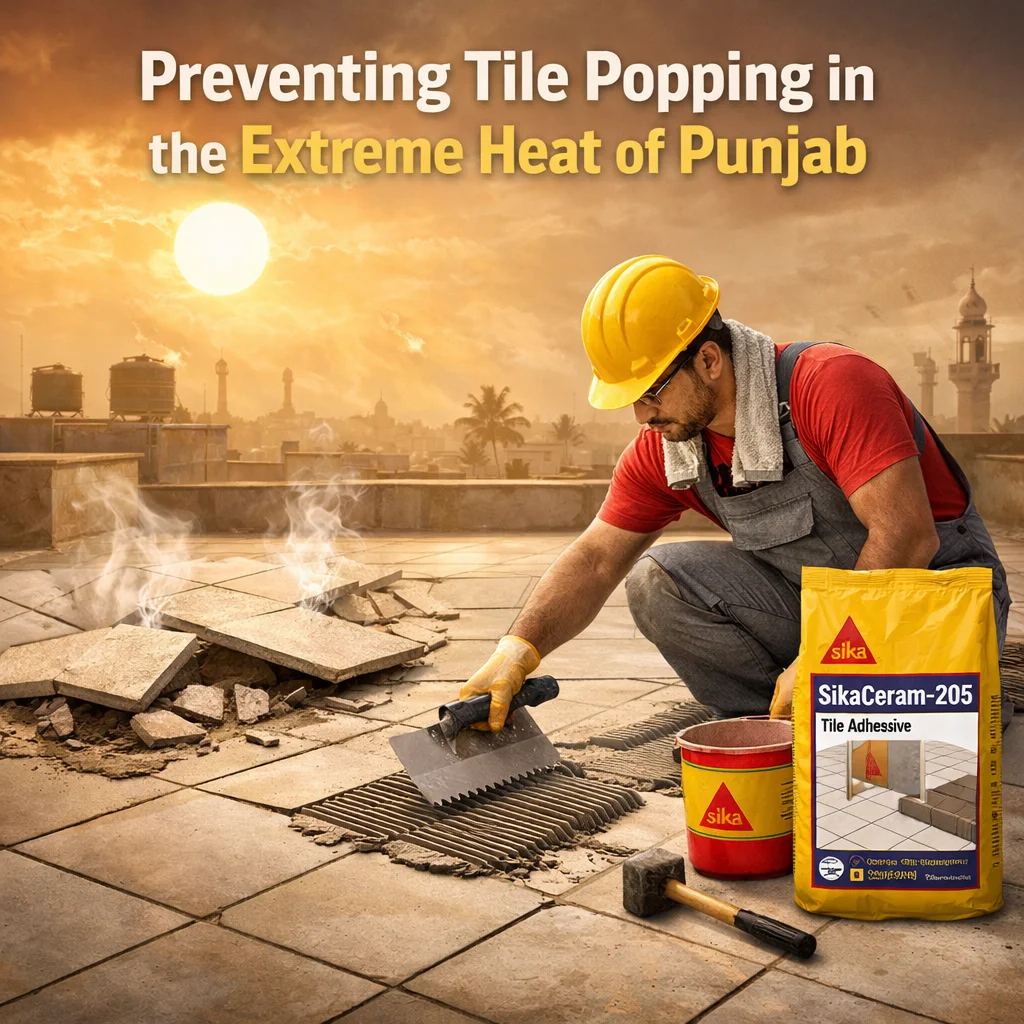
The summer sun in Punjab is unforgiving. As temperatures soar past 45°C, the ground cracks, the air shimmers with heat haze, and inside your home, an ominous hollow sound begins to emerge from beneath your feet. You ignore it at first—until one day, you step onto a tile and feel it shift, or worse, hear that sickening crack as a ceramic piece lifts from your floor. This is tile popping, and in the scorching climate of Punjab, it has become an all-too-common household nightmare.
I’ve walked through hundreds of homes across Lahore, Multan, and Faisalabad, witnessing the same heartbreak: beautifully tiled floors ruined by bulging, cracked, or completely dislodged tiles. The culprit isn’t poor workmanship alone—it’s the relentless battle between construction materials and extreme temperature fluctuations. Today, let’s explore the science behind preventing tile popping in the extreme heat of Punjab, drawing from both technical expertise and hard-earned local wisdom.
Understanding Why Punjab’s Heat Wreaks Havoc on Your Floors
The Silent War Beneath Your Feet
Every material in your home expands when heated and contracts when cooled. This basic physics principle becomes critically important when discussing tile installation. In Punjab’s climate, where daytime temperatures can hit 50°C and drop significantly at night, this expansion and contraction creates enormous stress on your flooring system .
Your tiles, the adhesive holding them, and the concrete substrate beneath all expand at different rates. When the sun beats down through windows or directly onto exterior tiling, tiles absorb heat rapidly. Meanwhile, the concrete below remains relatively cooler. This temperature differential creates shear forces—literally pulling the tile away from its bond .
Why Tiles Pop: More Than Just Heat
While extreme heat triggers the problem, several factors determine whether your tiles will survive summer:
Inadequate adhesive coverage remains the primary culprit. When installers “dot and dab”—applying adhesive in spots rather than covering the entire tile back—voids are created beneath the tile. Hot weather accelerates moisture loss from these adhesive spots, causing them to shrink and lose grip before properly curing .
Substrate preparation issues compound the problem. A dusty, uneven, or improperly cured concrete floor cannot form a lasting bond with tile adhesive. In Punjab’s dry climate, the substrate may also pull moisture rapidly from fresh adhesive through capillary action—a phenomenon professionals call “suction”—starving the cement of water needed for proper curing .
Moisture intrusion plays a paradoxical role. While we’re discussing heat, the monsoon season creates the opposite problem. Water seeping through microscopic cracks weakens adhesive bonds. When extreme heat returns, trapped moisture turns to steam, creating pressure that forces tiles upward .
The Science of Selection: Choosing Materials That Fight Back
Adhesives Engineered for Extremes
Not all tile adhesives are created equal. For Punjab’s climate, standard cement-based mixtures simply won’t suffice. Modern polymer-modified adhesives offer the flexibility needed to accommodate thermal movement .
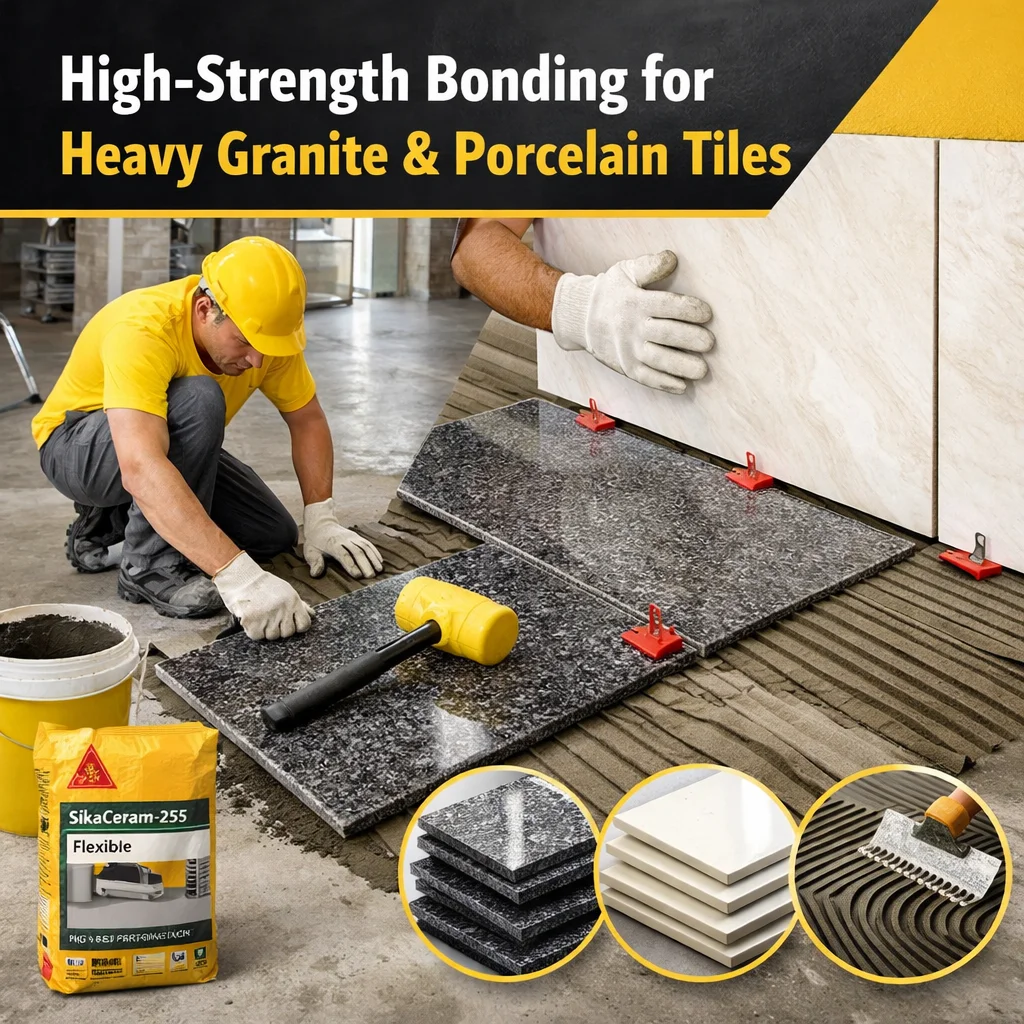
Products like SikaCeram®-288 H represent the kind of technology required for extreme conditions. This deformable adhesive can create layers up to 15mm thick while maintaining flexibility—allowing tiles to “breathe” with temperature changes rather than fighting against them . Its tensile bond strength of 2.2 N/mm² under normal conditions, maintaining 1.4 N/mm² even after heat exposure, demonstrates why material science matters .
For exterior applications exposed to direct sunlight and monsoon rains, two-component adhesives offer even greater protection. SikaCeram®-255 Large Tile provides C2TE classification under EN 12004 standards—specifically designed for external use and heated environments . The “E” in C2TE indicates extended open time, crucial when working in conditions where adhesives skin over rapidly .
The Tile Itself Matters
Dense, low-porosity tiles absorb less heat and resist thermal stress better than cheaper alternatives. Porcelain tiles, particularly those with through-body color, handle temperature fluctuations better than ceramic options. For exterior applications, look for tiles specifically rated for outdoor use with low water absorption rates (below 0.5%) .
Installation: The Critical Window
Timing Your Project
In Punjab, the difference between success and failure often comes down to when you install. Professional tilers across South Asia and the Middle East have learned this lesson through bitter experience .
The ideal installation window runs from October through March, when ambient temperatures stay below 35°C. If summer installation cannot be avoided, work must begin at dawn and finish by midday. Tents or shade structures prove invaluable—direct sunlight on fresh adhesive can raise surface temperatures 10-15°C above air temperature, accelerating moisture loss catastrophically .
Temperature Control at Every Step
Professional installers know secrets that make the difference between floors that last decades and those failing within months:
Store materials properly. Bags of adhesive left in direct sunlight can reach internal temperatures exceeding 60°C. When mixed, this hot powder combined with warm water creates a chemical reaction that accelerates setting time from 2-3 hours to perhaps 30-45 minutes—simply not enough time for proper placement and adjustment .
Water temperature matters enormously. Using cool water (below 24°C) for mixing extends working time dramatically. Some contractors in extreme climates actually use ice water or store mixing water in insulated containers overnight .
Dampen, don’t soak. Dry substrates act like sponges, immediately wicking moisture from fresh adhesive. Lightly misting the floor before spreading adhesive creates a moisture barrier that slows water loss. However, standing water must be avoided—it dilutes the adhesive and weakens the bond permanently .
The Technique That Saves Floors
Full contact bedding—applying adhesive to 100% of the tile back—remains non-negotiable. The “dot and dab” method creates air pockets that amplify thermal stress. For large-format tiles (anything over 60cm), back-buttering—applying a thin adhesive layer to the tile itself—ensures complete coverage even when the substrate isn’t perfectly flat .
Work in manageable sections. In extreme heat, adhesive can skin over in 10-15 minutes. If you spread more area than you can tile in that window, the adhesive forms a surface skin that prevents proper bonding. New tiles pressed onto skinned-over adhesive will never achieve full bond strength .
Movement joints save floors. Every 3-4 meters in each direction, and around room perimeters, movement joints must interrupt the tile field. These gaps, filled with flexible sealants like Sika Supermastic (which remains flexible from -30°C to +75°C), accommodate thermal expansion without transmitting stress to adjacent tiles .
The Curing Phase: Protecting Your Investment
The First 72 Hours Determine Everything
Once tiles are placed, the race against heat begins. Cement-based adhesives require moisture to cure properly—they don’t “dry,” they undergo a chemical hydration process. In Punjab’s dry heat, water evaporates from fresh adhesive faster than hydration can occur, leaving weak, powdery bonds .
Cover fresh installations with plastic sheeting or damp burlap for at least 72 hours. This traps moisture and slows evaporation, allowing proper crystal formation within the adhesive. In extreme conditions, some contractors mist installations periodically during the first day .
Prevent foot traffic. The “walkable after 24 hours” claim on many products assumes ideal conditions (23°C, 50% humidity). At 45°C, adhesive strength develops differently. Waiting 72-96 hours before heavy use prevents microscopic fractures that propagate into failures months later .
Real Solutions for Punjab Homes
What Works in Local Conditions
Through conversations with contractors across Punjab, several practical strategies emerge:
Exterior installations demand overkill. For patios, balconies, and roofs exposed to direct sunlight, use the highest-grade adhesive available (C2TE S1 classification). The cost difference—perhaps Rs. 100-150 per bag—pays for itself many times over by preventing replacements .
Consider tile size carefully. Large-format tiles (2×2 feet and above) look beautiful but experience greater thermal stress than smaller tiles. If using large tiles, ensure your installer understands the need for full-contact bedding and proper movement joints .
Light colors reflect heat. Dark tiles absorb more solar radiation, transferring that heat to the adhesive below. Light-colored tiles stay cooler and reduce thermal stress on the entire system.
Waterproofing beneath tile isn’t optional for exterior applications. Before tiling, apply a cementitious waterproofing membrane that accommodates movement. Products like Sika’s waterproofing compounds create a flexible barrier that separates tile movement from structural movement .
Recognizing Warning Signs
Early Detection Prevents Disaster
Your floor speaks before it fails. A hollow sound when tapped indicates separation between tile and substrate—the beginning of popping. Grout cracks along tile edges suggest excessive movement. Slight lippage—one tile edge slightly higher than neighbors—often precedes complete failure .
Address these warning signs immediately. In many cases, grout removal and sealing with flexible materials can extend floor life. Once multiple tiles sound hollow, replacement becomes inevitable—but understanding the cause prevents repeating the same mistakes.
Conclusion: Building for Punjab’s Future
Preventing tile popping in the extreme heat of Punjab requires respect for both science and local conditions. The days of assuming any tile installation will survive our summers are over. As temperatures climb and weather patterns become more extreme, our construction practices must evolve.
The investment in quality materials—flexible adhesives rated for extreme conditions, proper waterproofing, and professional installation techniques—pays dividends in floors that remain beautiful and functional through decades of Punjab summers. Your home deserves protection that matches the severity of our climate.
At Sika Chemicals, we understand these challenges intimately. Our range of cementitious adhesives, waterproofing solutions, and flexible sealants are engineered specifically for conditions like those across Punjab. From SikaCeram high-performance tile adhesives to Sika waterproofing membranes, every product undergoes rigorous testing to ensure performance when you need it most .
Visit our Lahore showroom or contact our technical team to discuss your specific project. Whether you’re building new or repairing existing floors, we’ll help you select the system that matches your needs and Punjab’s demanding climate.
Have you experienced tile popping in your home? What solutions worked for you? Share your stories in the comments below—your experience might help another homeowner avoid the same heartbreak.