Table of Contents
Case Study: How Sika Waterproofed the Metro Bus Project in Rawalpindi
Introduction: When a National Pride Project Faced a Watery Crisis
It was July 2015, and the brand-new Rawalpindi-Islamabad Metro Bus Project—a symbol of modern infrastructure and a source of national pride—was facing an embarrassing reality. The first heavy monsoon showers of the season had exposed a critical vulnerability. At several stations, including Peshawar Mor, Centaurus, and 7th Avenue, water was not just seeping in; it was pouring through the ceilings and flooding the platforms .
Passengers watched as water cascaded down staircases, and escalators had to be shut down. A passenger named Iqbal Hussain, waiting at the Centaurus station, captured the public sentiment perfectly: “Look at how much water is dripping from the ceiling” .
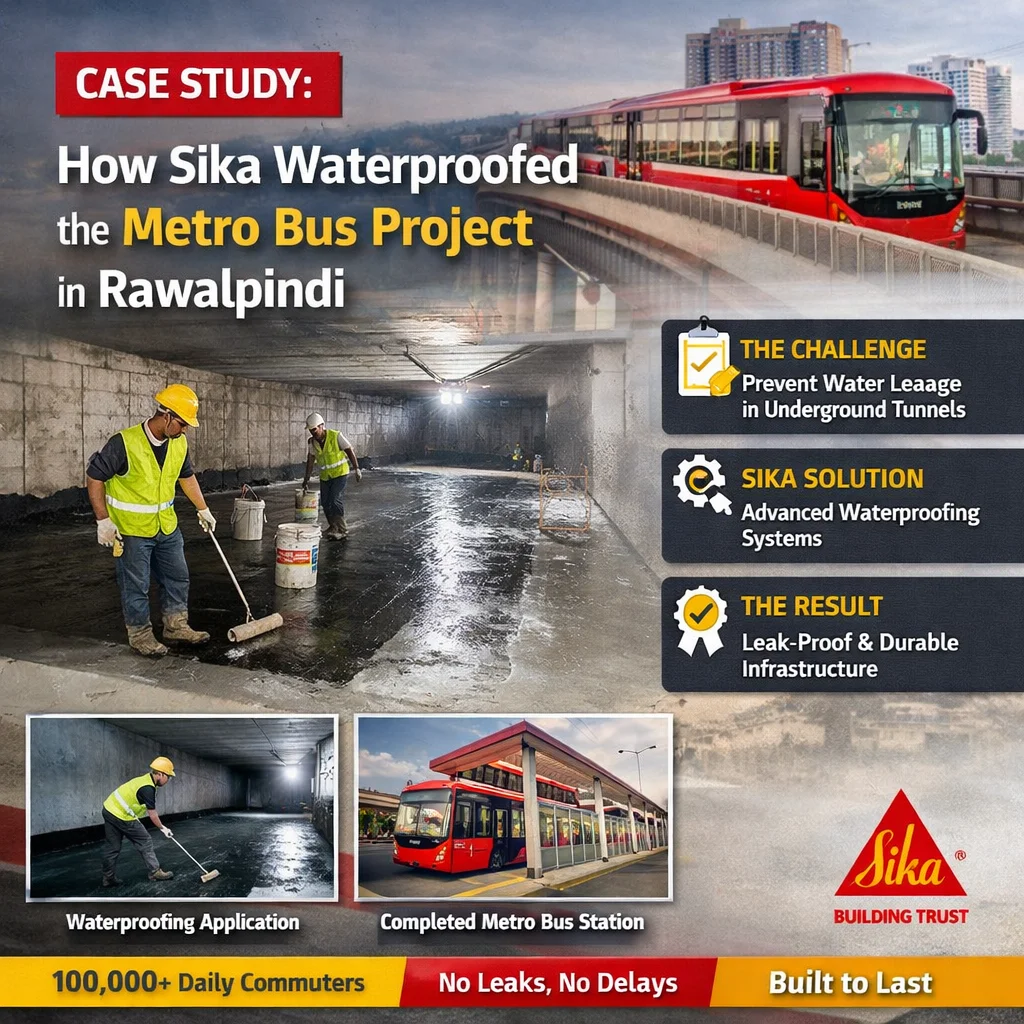
This was the challenge that led to a significant repair operation. In this Case Study: How Sika Waterproofed the Metro Bus Project in Rawalpindi, we’ll explore the technical detective work, the innovative solution, and the lasting impact of one of Pakistan’s most critical infrastructure repairs.
The Core Problem: More Than Just Rain
The initial reports pointed to “improper drainage” and “construction flaws,” but the reality was far more complex . The project’s 20 stations, spread over a 23-kilometer path connecting the twin cities, each featured a roof made of Aluminum Composite Panel (ACP) sheets .
While ACP is a standard material, the method of joining the sheets was the project’s Achilles’ heel. The joints were initially filled with standard silicone sealant. For a normal building, this might have sufficed. However, a bus station is not a normal building. It is a structure subject to:
- Constant Vibration: The sheer weight and movement of the buses caused micro-vibrations that slowly broke the bond of the rigid silicone.
- Thermal Expansion: The metal structure expanded and contracted with the extreme heat of Rawalpindi summers, creating gaps in the sealant.
- Hasty Application: Reports indicated “improper material and workmanship,” suggesting the sealant was applied too thinly or on poorly prepared surfaces .
The result was a network of leaks. With a staggering over 400,000 running feet of joint length across the project, the leakage was so widespread that tracing individual points was futile . The authorities needed a permanent, holistic solution—not just a patch-up job.
The Sika Solution: A Three-Layer Defense System
After the initial rains exposed the flaws, the Punjab government approved design modifications to extend the canopy shades . But extending the shades only prevented future rain from blowing in; it did nothing to fix the existing leaks in the roof structure. For that, a specialized solution was required, and Sika’s expertise was brought to the forefront.
The solution devised by experts like Khiam Sarwar of Fawchem, a specialist in construction refurbishment, was not just about reapplying sealant; it was about re-engineering the entire joint system to withstand the dynamic forces acting upon it .
Here is the step-by-step process that formed the core of this Case Study: How Sika Waterproofed the Metro Bus Project in Rawalpindi.
| Step | Action | Sika Product/System Used | Purpose |
|---|---|---|---|
| 1 | Remove & Replace | Polyurethane Sealant | Removed failed silicone; applied flexible sealant for vibration resistance. |
| 2 | Cure & Test | N/A | Allowed 6-7 days for sealant to cure; conducted water pounding tests. |
| 3 | Apply Membrane | LAM (Liquid Applied Membrane) | Applied over all joints for a continuous, monolithic barrier. |
| 4 | Finish & Protect | PU Flood Coat with Fabric | Added reinforcement and a UV-resistant top coat to match station aesthetics. |
1. Removing the Weak Link
The first step was one of the most labor-intensive: removing the poorly bonded, low-thickness silicone that had failed. In its place, the applicators installed a high-grade Polyurethane sealant. Unlike silicone, polyurethane is prized for its high movement capability, meaning it can expand and contract with the metal roof without breaking its bond—a critical feature for a structure experiencing constant vibration.
2. Creating a Monolithic Shield
Replacing the sealant alone would not have been enough. To ensure a 100% permanent solution, the entire joint area was covered with a Liquid Applied Membrane (LAM) . This system, which is polyurethane-based and UV resistant, was applied in a meticulous four-step process :
- Grinding: The surface around the joints was ground down to remove any old paint or contaminants, ensuring a perfect bond.
- Primer: A polyurethane primer was applied to prepare the surface.
- Flood Coat & Fabric: A “flood coat” of the liquid membrane was applied, and a reinforcing fabric was embedded into it. This creates a seamless, reinforced layer that acts like a second skin, bridging the gap of the joint.
- Top Coat: A final top coat was applied, not only for protection against the harsh UV rays of the sun but also to maintain the aesthetic look of the stations.
Unique Challenges: Working on a Live Project
What makes this Case Study: How Sika Waterproofed the Metro Bus Project in Rawalpindi particularly compelling is not just the technical solution, but the environment in which it was executed.
The team had to operate on a vibrating roof structure while the stations remained operational. The work was carried out under the pressures of a rainy season, meaning the team was often racing against the clock, and the height of the stations added a layer of complexity and safety concerns .
As noted in a presentation by ICRI (International Concrete Repair Institute), projects like this highlight the “unseen challenges in new construction” and the importance of “waterproofing with aesthetics”—ensuring the solution looked as good as it performed .
The Result: A Lasting Legacy of Resilience
The operation was a success. The Case Study: How Sika Waterproofed the Metro Bus Project in Rawalpindi concluded with a structure that could finally withstand the test of time and weather. By replacing the rigid silicone with flexible polyurethane sealant and reinforcing it with a high-strength liquid-applied membrane, the team effectively armored the 400,000 running feet of joints against the elements.
The project stands today not just as a testament to Sika’s product performance, but as a powerful example of how specialized refurbishment can save a national asset. It demonstrated that even in the face of rushed deadlines and initial design flaws, a scientific, quality-driven approach to waterproofing can deliver a permanent fix.
Build Stronger with Sika Chemicals
This project is just one example of how the right materials and expertise can protect your most valuable assets. Whether you are dealing with a leaking roof, a wet basement, or a large-scale infrastructure project, don’t wait for the next monsoon to expose your vulnerabilities.
Need help waterproofing your project? Sika Chemicals offers a full range of certified products, from polyurethane sealants to liquid-applied membranes, backed by expert support.
📞 Call us: 03329015232
📧 Email: info@sikachemicalscom.pk
🌐 Visit Our Store: [Sika Chemicals Pakistan]
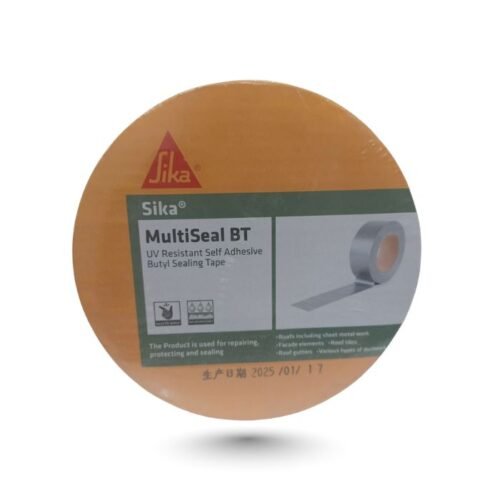
*Explore our full range of waterproofing solutions, including the SikaBitumen E-01 and Sika MultiSeal BT, available for nationwide delivery.*